
The G-Class is one of those automotive icons that has crossed decades without losing any of its aura. With its chassis built for off-roading, its unmistakable angular design, and its cult status among enthusiasts and celebrities alike, the G-Wagon has become much more than a 4×4: a symbol of luxury and ruggedness. But in the era of energy transition, Mercedes has chosen to create an unprecedented version: more compact, 100% electric, and designed for the city.
Presented as a teaser at the IAA Mobility show in Munich, this future model — nicknamed “Baby-G” or “Mini G-Class” — is based on a new dedicated platform. Its design will incorporate the visual codes of the original model: cubic silhouette, round headlights, flat hood, and stately appearance. But this will be a completely redesigned vehicle, with all-electric all-wheel drive, reduced format, and assumed urban versatility. Perfect for attracting a younger clientele seeking a trendy and charismatic SUV.
Expected in 2026, the Mini G promises to be a premium electric alternative, positioned below the recent EQG (G580) but with real personality. Mercedes intends to expand the G-Class universe while capitalizing on its image, in a strategy already begun with the EQ range. The objective is clear: offer more affordable access to the myth, without sacrificing its DNA or its all-terrain capabilities.
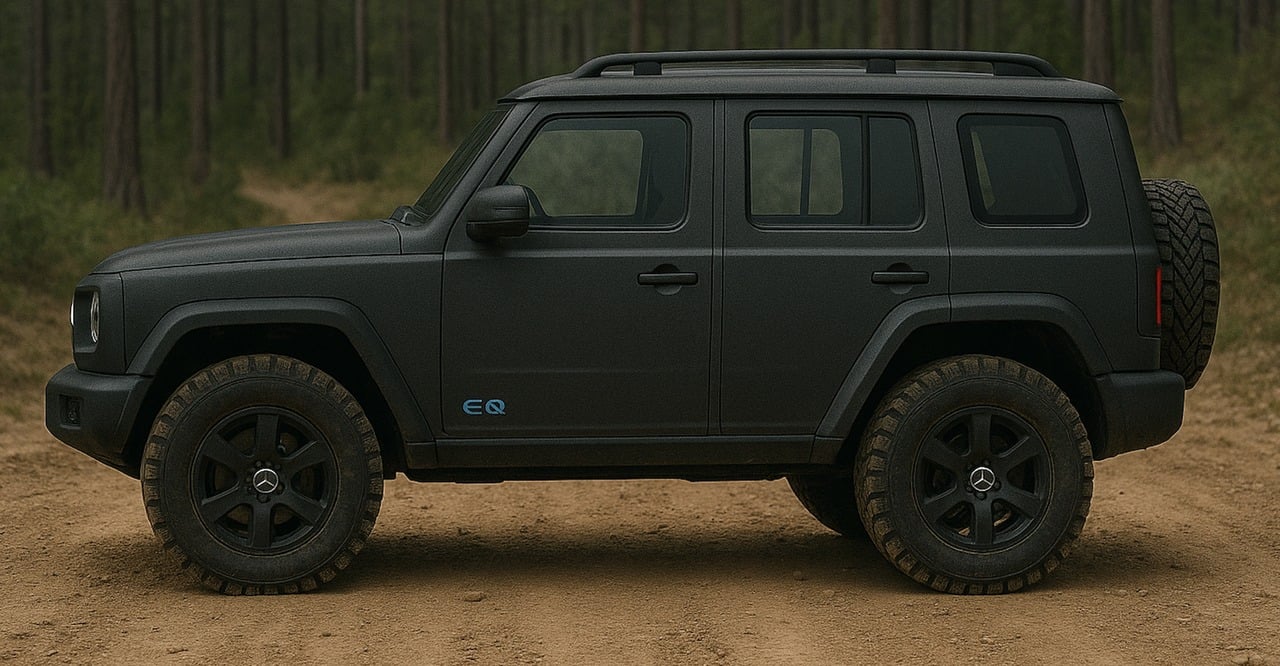
A G-Wagon for everyone: the legend gets miniaturized without becoming commonplace
Mercedes surprised by unveiling the first elements of an ambitious project: that of a 100% electric Mini G-Class, which would preserve the DNA of the famous G-Wagon in a more compact, more urban, and especially more accessible format. Long reserved for affluent clientele, the G-Class is preparing to expand its family, going through downsizing without denying its identity.
This future model, nicknamed internally “Baby-G” or “Little G”, was officially teased at the 2025 Munich show (IAA Mobility). This is not a stripped-down version of the EQG (the G580 with four motors), but a completely new SUV designed on a specific platform, with its own body. The intention is clear: preserve the iconic G-Class style — straight lines, round headlights, monolithic appearance — while offering a new electric alternative for a broader target audience.
This isn’t the first time Mercedes has attempted a more accessible derivative of an iconic model, but here, the challenge is to marry authenticity and electrification, without diluting the G’s image. According to initial indications, the Mini G will retain a genuine body-on-frame chassis, as well as ground clearance and off-road capabilities that go well beyond just the rugged look.
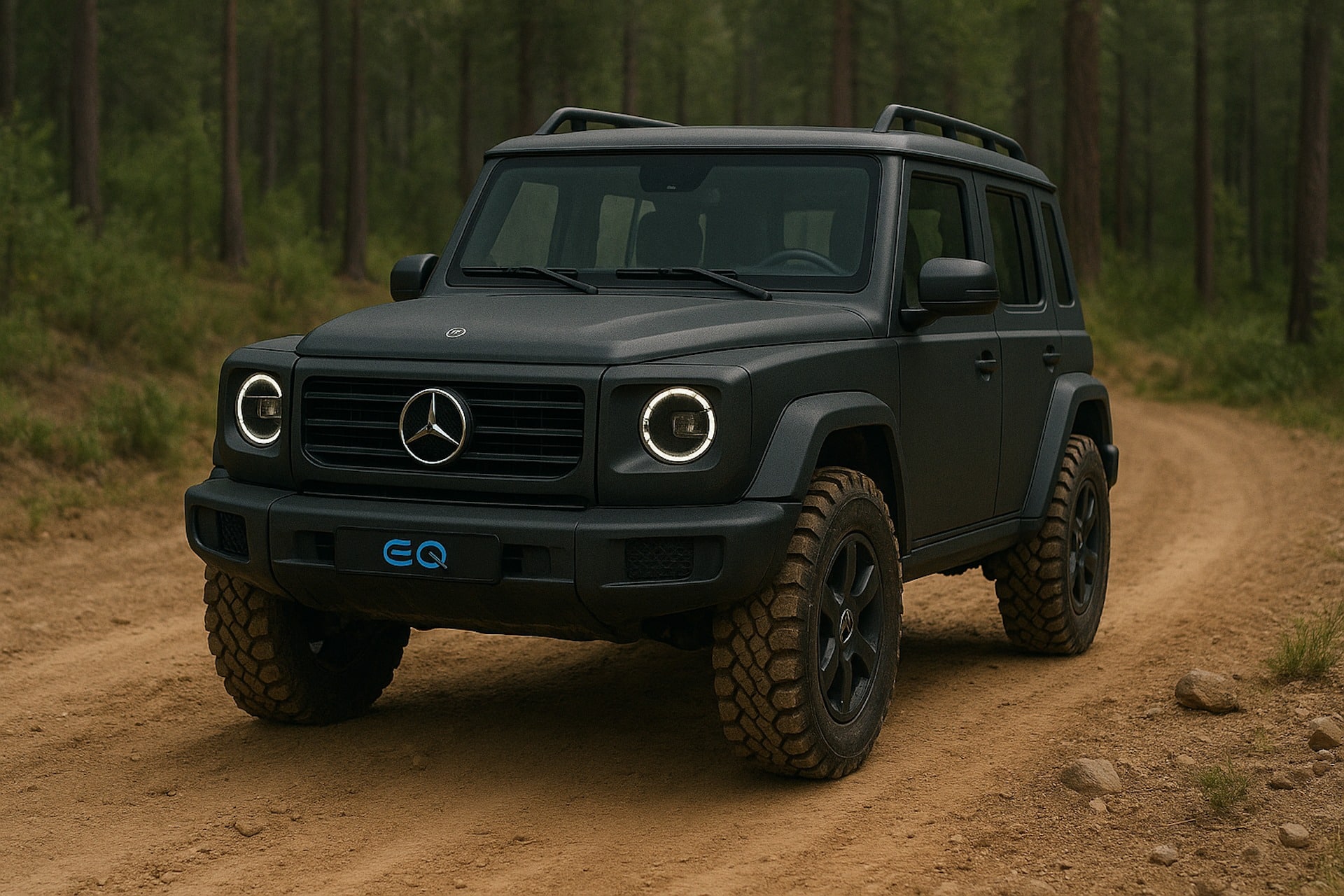
Faithful design, revised proportions: G-Class style adapted for the city
Design remains at the heart of the project. According to presentation images, the Mini G-Class reproduces the visual codes of the original model line for line, in a concentrated version. We find the chrome-ringed round headlights, the vertical grille, the flat surfaces, and even the side-opening tailgate with external spare tire. All in a shortened format, adapted for urban use.
This reduced format — close to 14.1 feet long according to estimates — targets clientele looking for an SUV with prestigious looks, but dimensions compatible with daily use, even urban driving. The visual effect promises to be striking: a “small” G-Wagon, but with the same imposing posture as its big brother. Mercedes capitalizes here on the immediate recognition of the G-Wagon, while anchoring it in a new era.
The interior hasn’t been revealed yet, but it should logically incorporate the spirit of the EQG or recent compact models from the brand, with particular attention to presentation, materials, and onboard connectivity. Mercedes aims here for an upmarket move against premium compact electric SUVs, while cultivating a unique positioning.
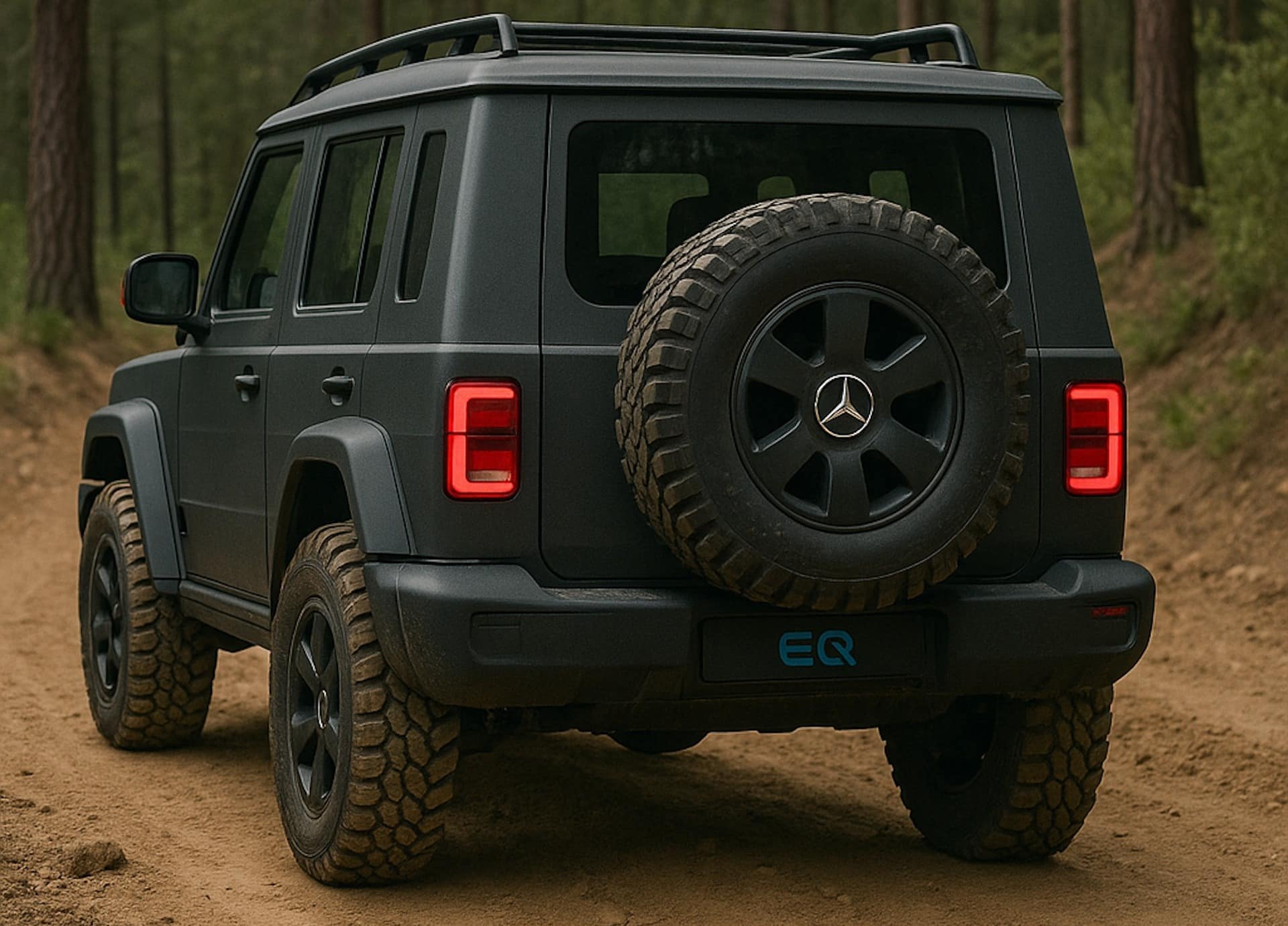
100% electric, and truly off-road capable: a Baby-G that doesn’t mess around
While Mercedes has opted for fully electric propulsion, it’s not sacrificing off-road capabilities. Unlike some SUVs that adopt the rugged look without the technical skills, the Mini G-Class promises real off-road aptitude. It will rely on electric all-wheel drive — likely via two motors — and electronic management designed for light off-roading.
The technical foundation remains unclear, but the brand mentions a dedicated EV architecture, probably derived from the MMA platform (Mercedes Modular Architecture), designed to accommodate both gasoline and 100% electric models. This would allow the Mini G to offer an estimated range of around 250 to 310 miles, according to EPA standards, while integrating compact but high-performance batteries.
Mercedes emphasizes that this model will not be a simple “urban show-car.” The Baby-G is designed to go off the beaten path, with optimized approach angles, underbody protection, and sufficient ground clearance to tackle trails or more demanding terrain. A rarity in the compact electric SUV segment, often closer to crossovers than true off-roaders.
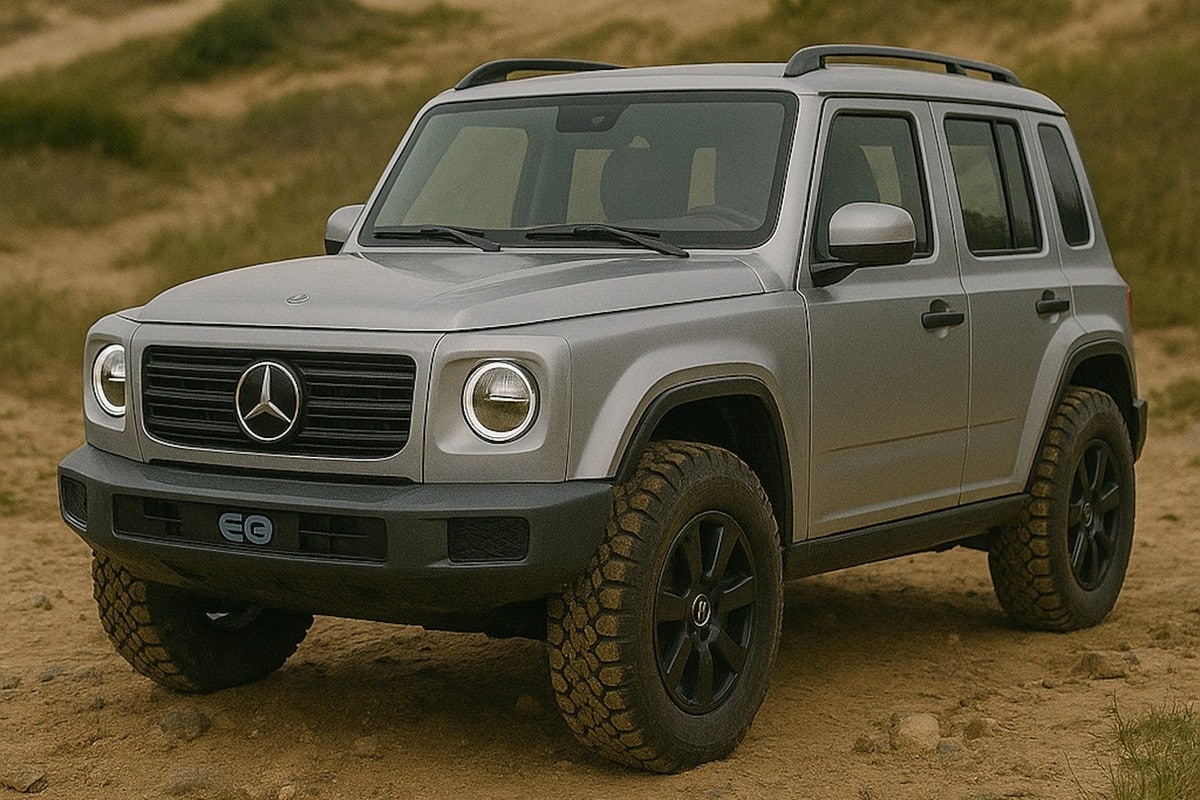
A clear strategy: expand the G-Class without distorting it
With this electric Mini G-Class, Mercedes intends to make the G-Wagon universe more accessible — not just in terms of price, but also usage. By reducing its dimensions and powering it with electricity, the manufacturer expands its offering in a logic of controlled diversification, without compromising the image of ruggedness and prestige of the G range.
Positioned below the Mercedes EQG, whose prices easily exceed $165,000, this “Baby-G” could start around $60,500 to $71,500, depending on trim levels and equipment. It would thus compete with models like the future electric Land Rover Defender, or premium versions of the Jeep Recon or Ineos Fusilier.
Mercedes achieves a rare balance here: capitalizing on a prestigious icon, while meeting the imperatives of modernity, size, and electrification. The 2026 Mini G-Class will not be a simple marketing derivative, but truly a new pillar of the G range, designed to last… and to seduce well beyond fans of the original 4×4.

