
The name Savana isn’t new at Mitsubishi. This extreme version of the L200 Triton first appeared in Brazil in the early 2000s, designed to meet the needs of users facing terrain inaccessible to conventional vehicles. In 2025, this variant returns in a more muscular version than ever, staying true to its original spirit: functional, rugged, and decidedly focused on off-roading.
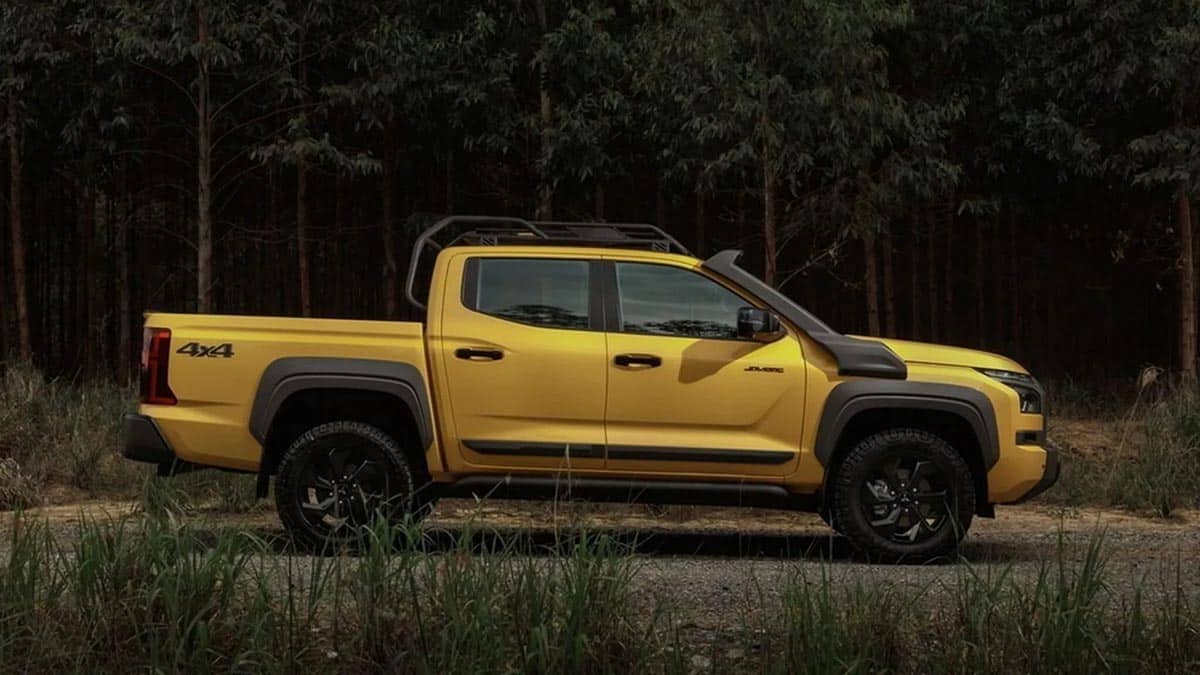
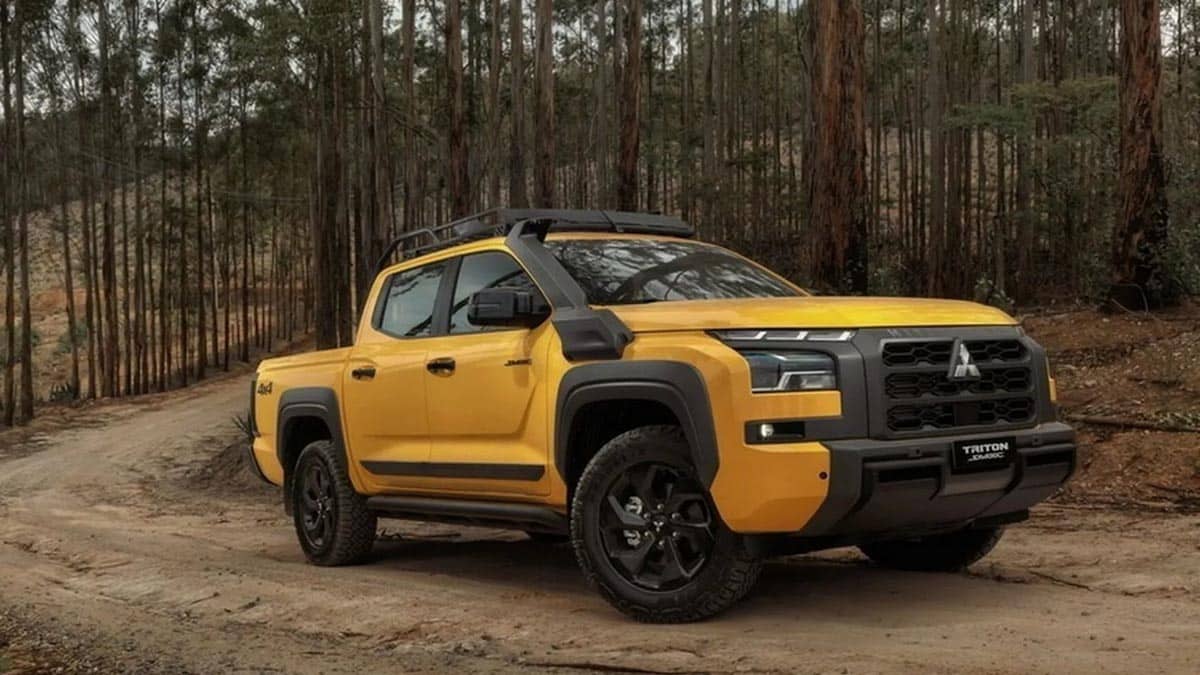
Built on the latest generation L200 (also known as Triton depending on the market), the Savana adopts an unmistakable exterior style. Its appearance evokes emergency response pickups: sand or khaki colors, fender flares, underbody protection, and specific equipment for hazardous zones. Mitsubishi makes no bones about it: the Triton Savana targets adventurers, military personnel, and field professionals, far from urban SUVs masquerading as off-roaders.
This model remains primarily designed for South American markets, where pickups are used in extreme conditions: river crossings, remote rural areas, impassable trails. A usage logic difficult to transpose to Western Europe, but one that certainly fuels fascination among off-road enthusiasts.
Off-Road Preparation Built to Take Punishment
The L200 Savana goes well beyond a simple rugged look. Its equipment includes an air intake snorkel, allowing deep water crossings without risking hydrolocking, as well as reinforced armor for vital components: transfer case, engine oil pan, fuel tank. The all-terrain tires on 17-inch wheels, reinforced suspension, and metal bumpers further improve its off-road capabilities.
Under the hood, Mitsubishi keeps the reliable 2.4-liter twin-turbo diesel producing 205 hp and 347 lb-ft of torque, paired with Super Select 4WD-II all-wheel drive with low-range transfer case. Enough to tackle steep, sandy, or muddy terrain without breaking a sweat. All with electronic aids limited to essentials, to avoid unnecessary breakdowns in the wilderness.
The revised ground clearance, improved approach and departure angles, and ability to ford nearly 31 inches of water make it a true exploration tool. Mitsubishi hasn’t succumbed to the temptation of over-equipping it with gadgets: the Savana prioritizes raw efficiency, making it almost an exception in the sanitized world of modern pickups.
Rugged Interior But Consistent With Its Mission
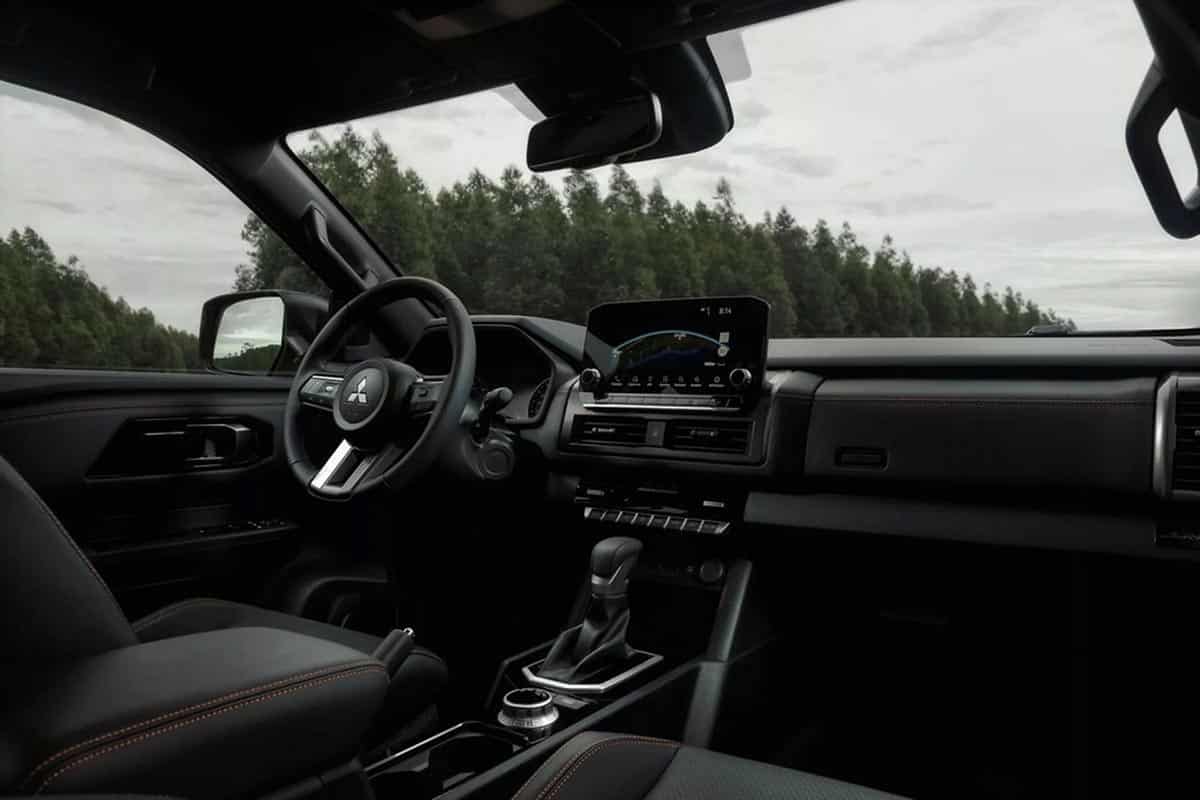
Inside, the Mitsubishi L200 Triton Savana stays true to the model’s utilitarian spirit. You’ll find a sober dashboard, durable materials, and equipment focused on essentials. Ergonomics are designed for use with gloves, and the interior can be easily washed – an important detail for an adventure vehicle.
Some higher trim levels still benefit from welcome comfort features: automatic climate control, touchscreen with smartphone connectivity, vinyl or synthetic leather upholstery, multifunction steering wheel. But overall, priority remains durability and ease of maintenance, not refinement. Mitsubishi takes a rational approach, designed for long missions on hostile terrain.
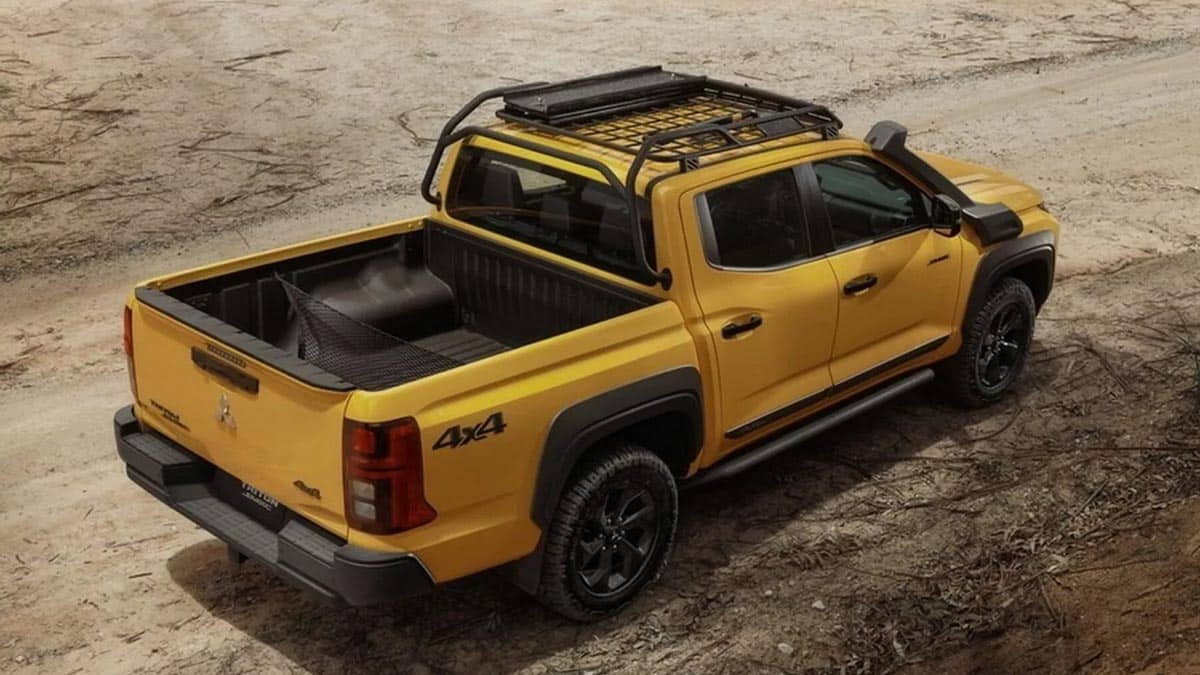
Rear space remains adequate for a crew cab, allowing you to bring a small team or equipment. Additional anchor points, specific storage compartments, and the ability to integrate a hard top or military mounts complete the package for professional use.
A Radical Pickup, But Absent From the US Market
Despite its obvious qualities, the Triton Savana will not be sold in the United States, or even in most developed markets. Mitsubishi has clearly reserved this model for Brazil and certain Latin American markets, where demand for technical and rugged pickups remains strong. In the US, the L200 has been absent from the lineup for years, victim of market preferences shifting toward lifestyle-oriented trucks.
Importing such a model would involve complex certification (EPA emissions standards, DOT safety requirements), an aftermarket service network trained to maintain a very specific model, and pricing positioning incompatible with the American market. At a time when pickups sold in the US are increasingly oriented toward “lifestyle” or light commercial use, the Savana is truly unique.
There remains the option of parallel importation through specialists, but this is expensive and subject to technical constraints. The very existence of this version reminds us what a pickup once was: a work and adventure tool, designed to handle the worst conditions, far from chrome finishes and SUV-style marketing.
A Rare Alternative to Tacoma TRD Pro or Ranger Raptor
On paper, the L200 Savana could rival models like the Toyota Tacoma TRD Pro, Ford Ranger Raptor, or even the Chevrolet Colorado ZR2, all designed with a pronounced off-road orientation. But unlike these often luxurious competitors, the Mitsubishi focuses on pure functionality: no Fox suspension or XL screens, but a true “expedition” spirit.
Its strength is its authenticity: proven technical foundation, simple design, honest performance without artifice. It’s the pickup you imagine in a desert, tropical forest, or mining operation, not in a shopping center parking lot. A philosophy almost extinct in America, but still alive in other parts of the world.
While it won’t be sold in the US, the Triton Savana reminds us that a pickup can still be a real tool, not just another SUV. For certain enthusiasts or professionals seeking a vehicle built for the tough stuff, its existence might spark ideas… or importation desires.

