
In the hybrid SUV family, the Toyota RAV4 remains a cornerstone. A segment pioneer with its hybrid version starting in 2016, it continues to dominate sales thanks to a formula blending efficiency, durability, and versatility. In 2026, the Japanese automaker is preparing a new generation that’s even more ambitious, without changing everything, but clearly stepping up its game: bolder styling, expanded capabilities, and refined technologies.
This new-generation RAV4 aims to strengthen its rugged image with a more angular silhouette, redesigned grille, and a GR Sport version with a distinctly off-road look. Inside, there’s no revolution but a deliberate commitment to keeping physical controls accessible, modern screens, and driving functions adapted to challenging terrain. A direct response to those expecting a robust SUV without going to extremes.
Mechanically, Toyota chooses continuity with proven hybrid powertrains, but introduces a real novelty: a front-wheel-drive plug-in hybrid version, never before seen on the RAV4. The goal: offer a more competitive entry price while maintaining the characteristic 62-mile electric range and fuel efficiency of the model. A positioning that could hurt European… and Chinese competition.
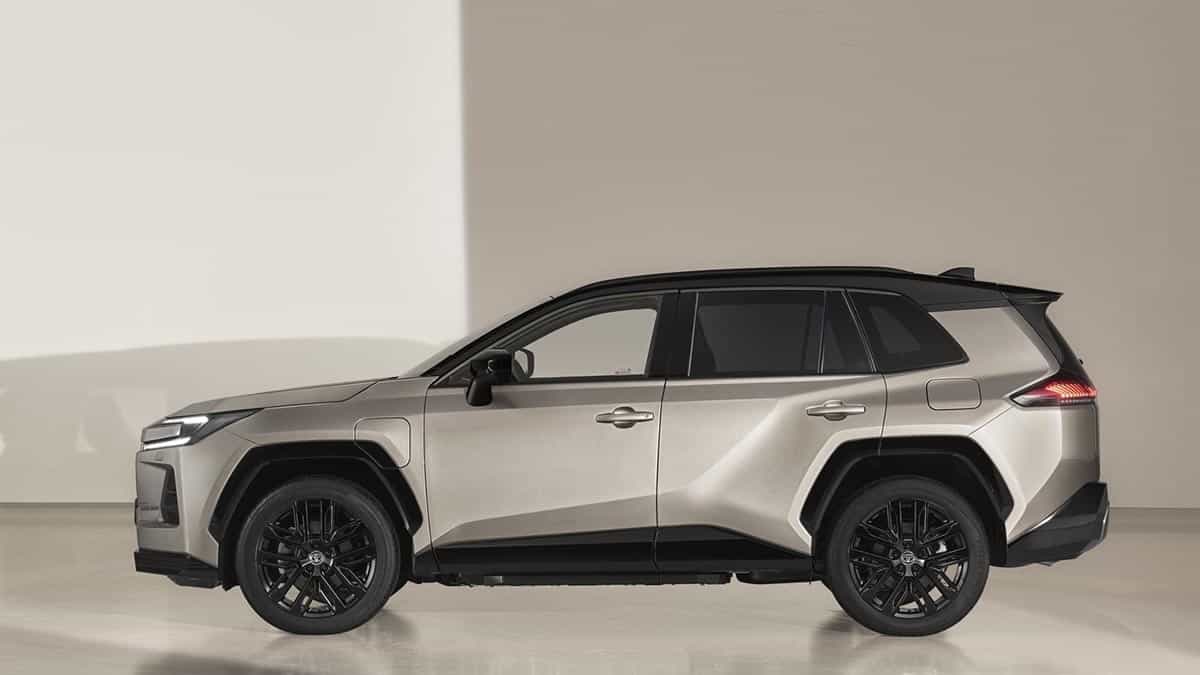
Toyota muscles up its family SUV to face 2026
Since its launch, the Toyota RAV4 has embodied the archetype of the versatile SUV: compact enough for the city, spacious enough for families, and robust enough for off-road adventures. At a time when the market is intensifying under pressure from European, Korean, and especially Chinese brands, Toyota is preparing a calibrated response for 2026, with a new RAV4 generation that’s both more assertive and more diversified.
In a segment where hybrid SUVs are becoming the norm, Toyota continues to bet on its DNA: reliability, efficiency, and robustness. But this time, the manufacturer isn’t content to gently evolve its flagship model. It’s repositioning it more clearly against the growing demand for SUVs with a rugged look, without abandoning driving comfort or energy efficiency. The 2026 RAV4 intends to establish itself as the alternative for those who want an efficient SUV but don’t need a true 4×4.
With this upcoming generation, Toyota is playing on several fronts: preserving its loyal base, attracting fans of more assertive design, and responding to ambient pricing pressure with an expanded mechanical offering, including an unprecedented front-wheel-drive plug-in hybrid version.
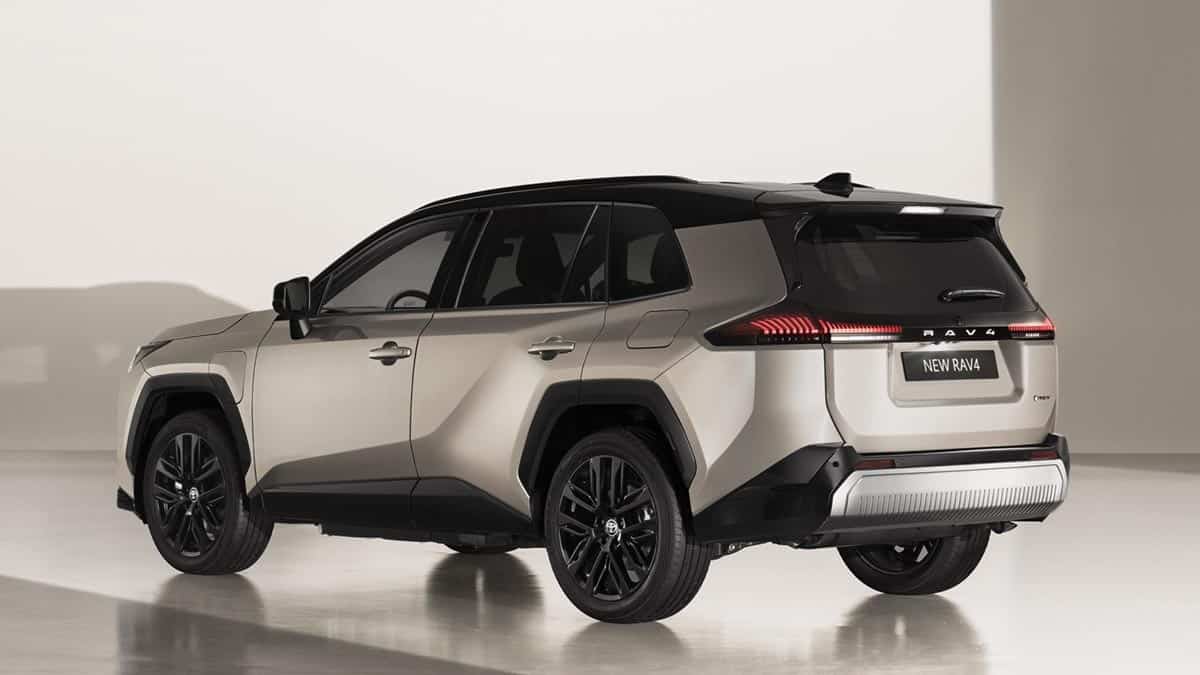
A more assertive silhouette, between crossover and adventurer
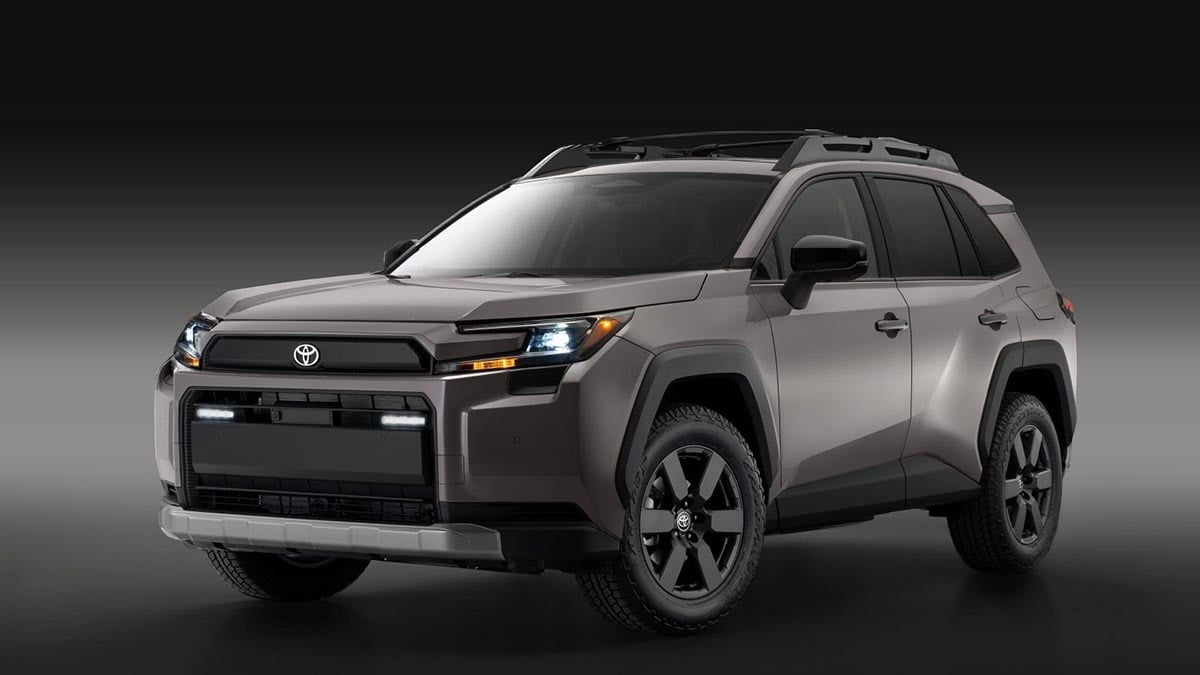
Visually, the new RAV4 keeps the current model’s general appearance but displays a more vertical and pronounced stance, especially at the front. The grille gains presence, lines tighten, and surfaces become straighter. This restyling clearly aims to bring the RAV4 closer to the Land Cruiser universe without giving it the “mini 4×4” label.
Two distinct ambiances are offered:
- a more urban “crossover” version with a grille integrated into the body color and smoother treatment;
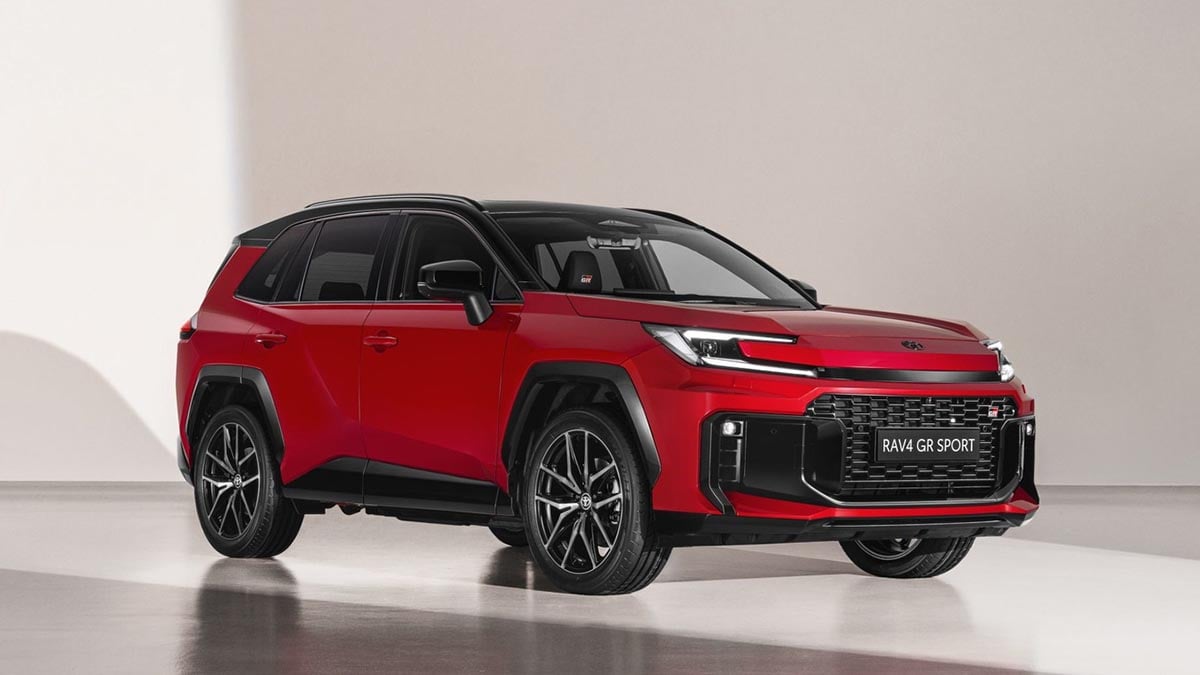
- and a GR Sport version, more aggressive, with black trim, specific bumpers, flared wheel arches, and a distinctly more rugged visual signature.
Toyota isn’t just playing on appearance here: the RAV4 GR Sport also integrates driving modes adapted to trails, preserved ground clearance, and a suite of driving aids calibrated for slippery conditions. The idea? Offer a credible semi-off-road alternative for those who regularly leave the pavement without going to the body-on-frame chassis of a Land Cruiser.
HEV or PHEV: two hybrid powertrains to choose from
Under the hood, Toyota plays the continuity card. The self-charging hybrid (HEV) powertrain remains the lineup’s base, with:
- 183 hp in front-wheel drive (FWD) version
- 191 hp in AWD-i version with rear electric motor
A rational choice, known for its exceptional fuel economy in mixed use and reliability that’s a market reference. This solution clearly addresses those who don’t want to plug in their car but want to reduce consumption without constraints.
But the big news comes from the plug-in hybrid (PHEV). Already known on the current model, it returns with a 22.7 kWh battery enabling up to 62 miles of electric range in EPA cycle. And now, Toyota offers a front-wheel drive (FWD) variant alongside the existing AWD-i.
Both variants display very generous power outputs:
- 268 hp for the PHEV FWD
- 304 hp for the PHEV AWD-i
And most importantly, this front-wheel drive version could lower the entry price to the RAV4 plug-in hybrid, making it more accessible against aggressive competition, particularly from Peugeot 3008, Ford Escape, or MG EHS.
An SUV made for the road… but not only
The Toyota RAV4 has never denied its slightly off-road origins, and this 2026 model further reinforces this dimension. Despite its unibody base and SUV orientation, it now integrates:
- Trail and Snow modes accessible via physical buttons,
- hill descent control,
- and optimized ground clearance to tackle trails or rough paths.
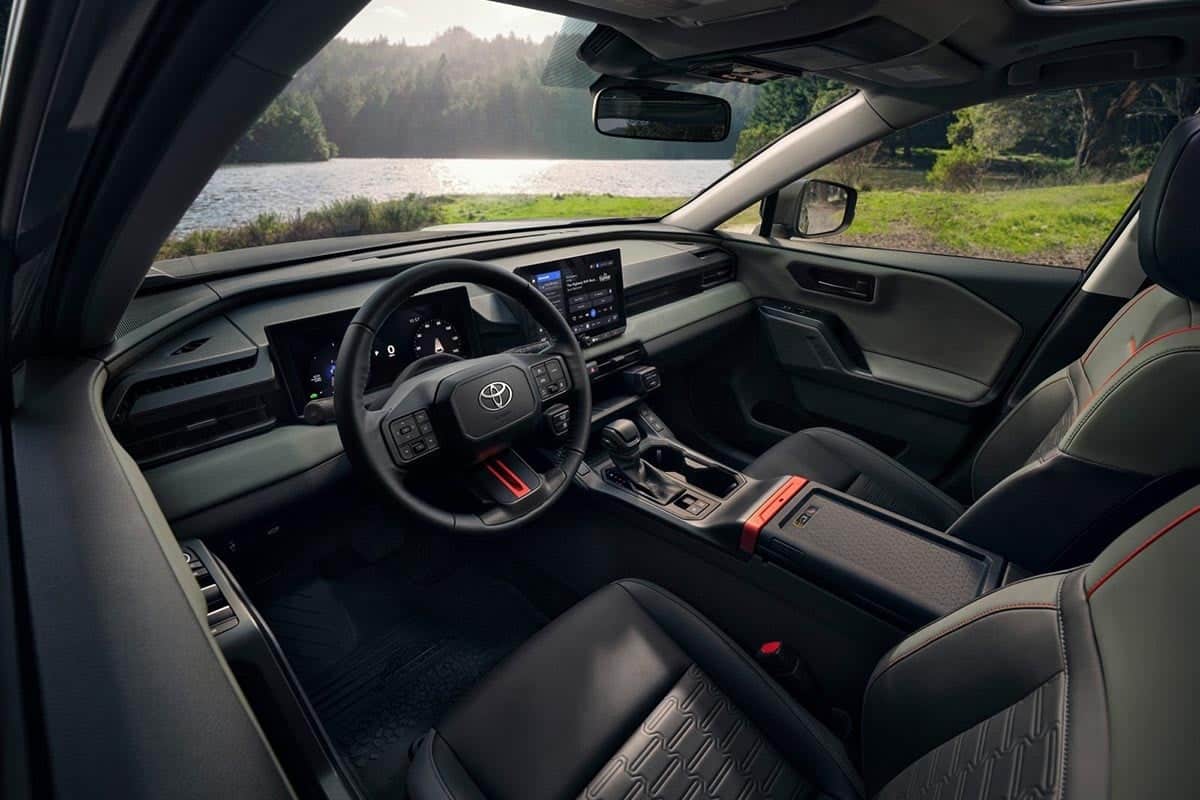
The interior remains faithful to the Toyota approach: pragmatic cabin, well-integrated screens, but also physical buttons for essential functions, ensuring ergonomics even with gloves or in demanding conditions.
The GR Sport establishes itself as a true versatile alternative, designed for those who want to break out of the mold without going to pure off-road. A smart compromise, in line with the needs of an active clientele: family, leisure, driving on secondary roads or in all weather conditions.

