
The Santana name resonates like a distant memory for off-road enthusiasts. A former manufacturer of all-terrain vehicles under Land Rover license, the Spanish brand had disappeared from the radar for years. But here it is back, relaunched with ambition and driven by new industrial momentum. The Santana Factory, located in Andalusia, will assemble its first models starting in Q1 2025.
Behind this renewal, a clear strategy: betting on the brand’s off-road DNA while embracing more modern technologies, particularly hybridization. For this, Santana partners with Chinese manufacturer BAIC, specialized in 4×4 vehicles. From this collaboration will emerge two major models for the relaunch: a 409-hp hybrid family SUV, derived from the BAIC BJ30, and a rugged off-roader, based on the BJ40, offered in diesel or plug-in hybrid.
With these two complementary products, Santana intends to reposition itself as a serious 4×4 player in Europe, between electrified mainstream solutions and niche adventure vehicles. A bold bet that reminds us that Europe can still locally produce SUVs and off-roaders adapted to its markets… even in the era of widespread electrification.
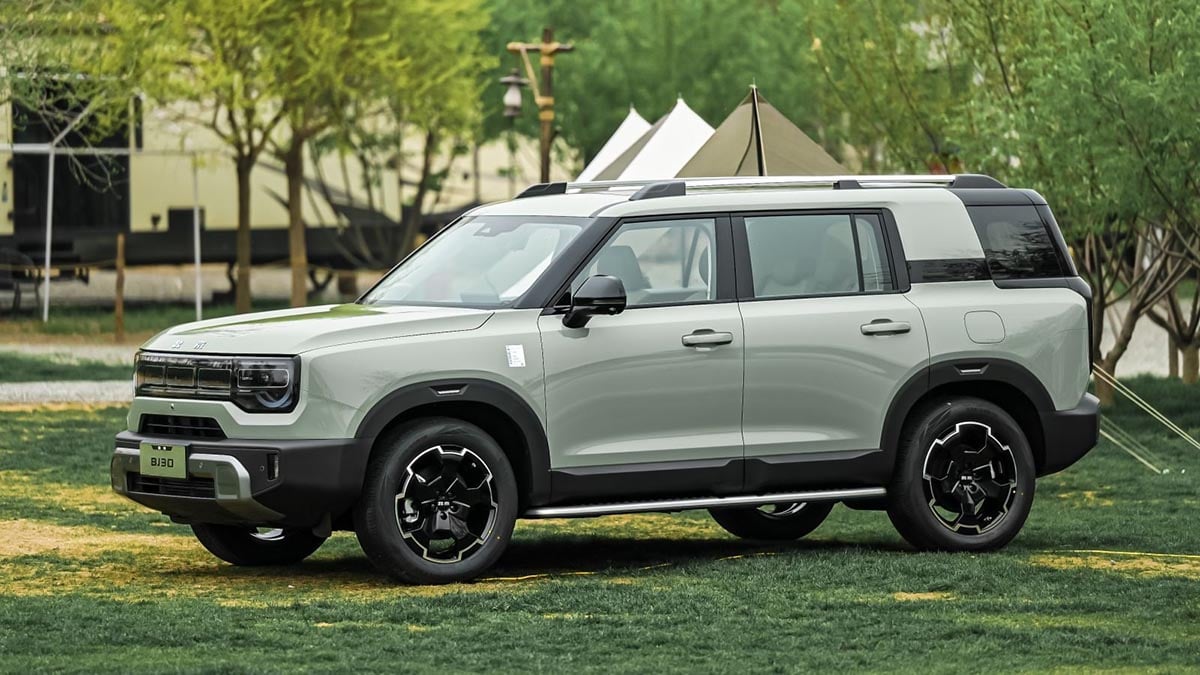
The Unexpected Return of Santana, Symbol of Iberian 4×4
The Santana brand, missing for several years, resurfaces with a concrete, ambitious industrial project… and 100% Andalusian. The official launch of the Santana Factory, its production site located in Spain, signals a clear intention: reconnecting with the brand’s off-road DNA while meeting European market requirements.
Behind this renaissance, a well-thought-out industrial strategy: locally assembling models adapted to Europe in partnership with Asian brands with proven technologies. The Santana 400, a 4×4-type pickup, will kick things off. But it’s especially the two upcoming announced models — a hybrid SUV and a true 4×4 in diesel or PHEV — that mark a turning point. Santana doesn’t return alone, but accompanied by BAIC, a Chinese manufacturer renowned for its off-road vehicles.
A Strategic Partnership Between Santana and BAIC
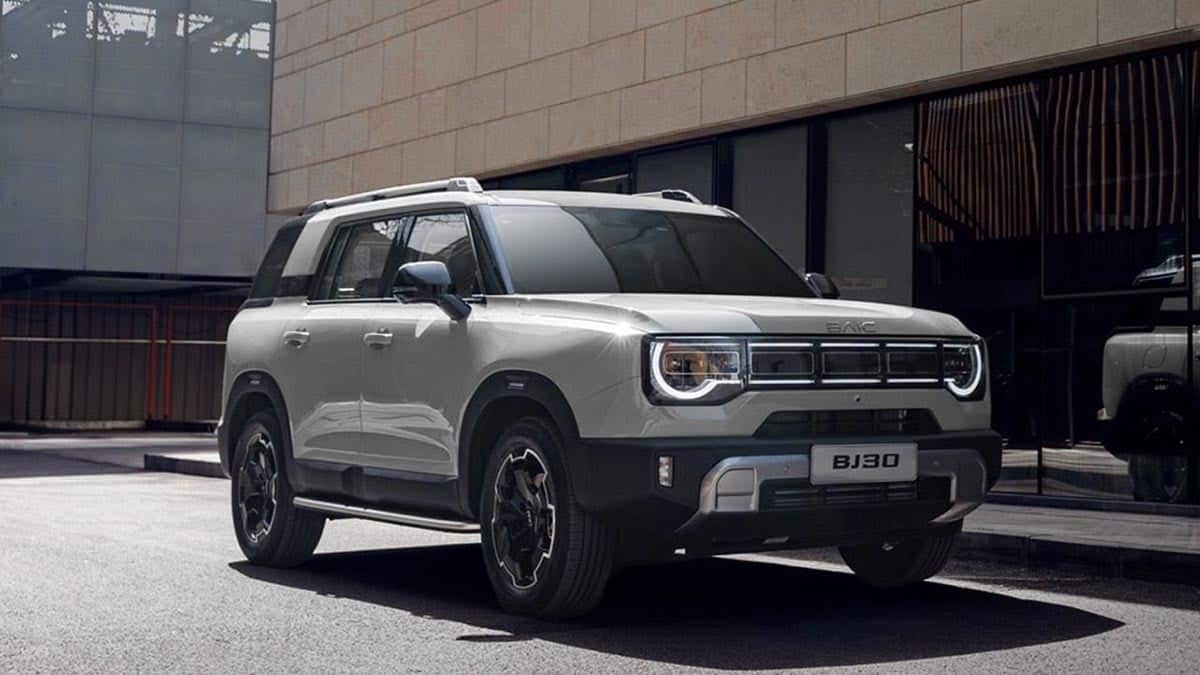
To succeed in its return, Santana relies on a strong partnership with BAIC, one of the pillars of the Chinese automotive industry, particularly in the off-road domain. This alliance will allow Santana to locally industrialize two models derived from the BAIC range: the BJ30 and the BJ40.
The deal is clear: BAIC provides the technical foundation, while Santana redesigns the bodies, adapts the configurations, and assembles the models in its Spanish factory. This “Europeanization” strategy aims to offer competitive vehicles with distinctive design, and above all compliant with European standards and customer expectations, both in terms of equipment and powertrains.
BJ30: A 409-HP Hybrid SUV Designed for European Roads
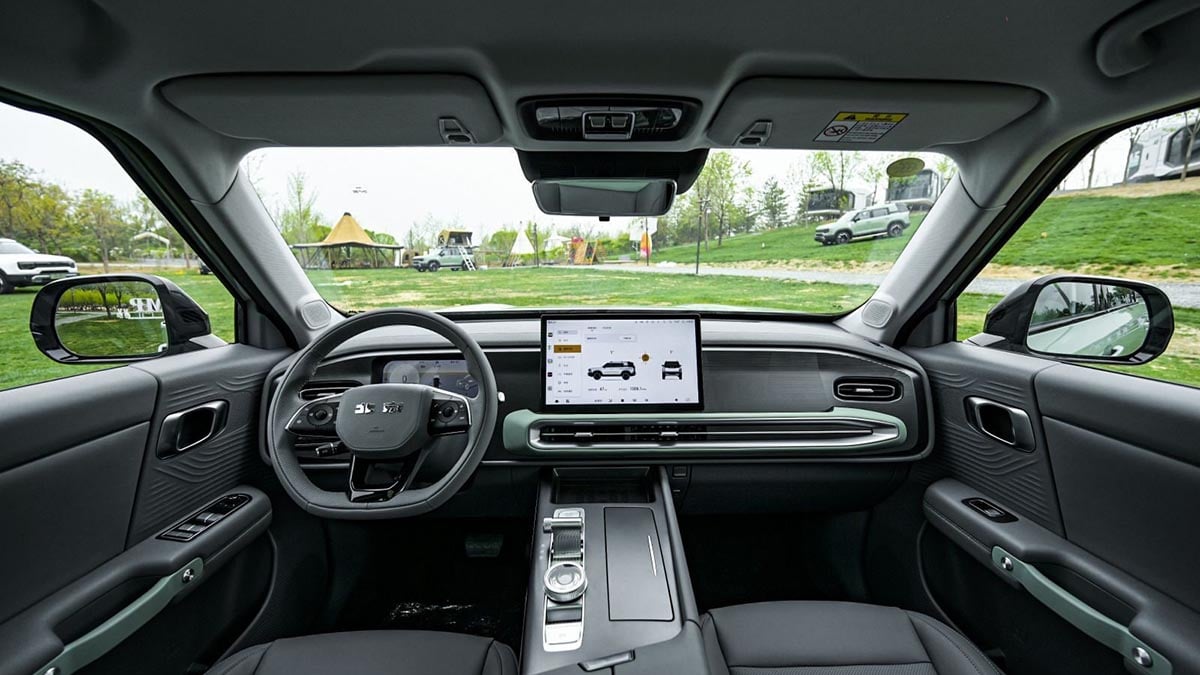
First of the two mainstream models, the Santana BJ30 will be based on the BAIC BJ30, a 15.5-foot SUV with assertive design. While it retains adventure vehicle aesthetic codes, it’s primarily intended for road and family use. This is Santana’s answer to the urban and compact SUVs of the European market.
Under the hood, this model will feature a non-plug-in hybrid drivetrain based on a turbocharged 1.5-liter engine, delivering up to 409 combined horsepower. Impressive power for the segment, made possible by optimized series/parallel hybridization. Fuel consumption would be contained around 28 mpg according to figures provided in the Chinese market — to be adjusted according to EPA standards.
A powerful, efficient, and dynamic SUV that could appeal to families seeking an electrified alternative without charging constraints.
An SUV That Aims Wide, Between Price and Versatility
With the BJ30, Santana clearly targets a broader clientele than traditional off-road enthusiasts. The objective is to directly compete with models like the Toyota RAV4, Nissan Rogue, or Hyundai Tucson Hybrid, but with a more aggressive price/power ratio, and local manufacturing as a bonus.
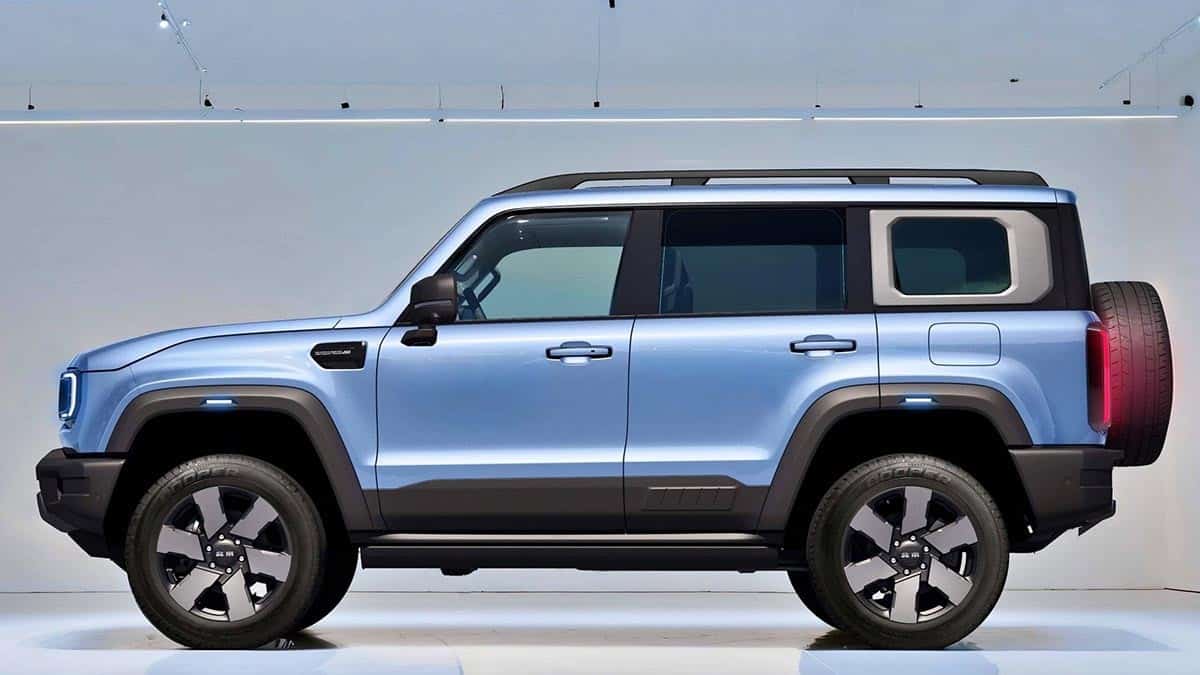
The interior should offer comprehensive equipment (connectivity, driver assistance, digital instrumentation), and a modern presentation without premium excess. Thanks to its simple hybrid powertrain, the BJ30 could qualify for various emission standards, making it perfectly compatible with low-emission zones.
If Santana manages to keep the price below $44,000, this BJ30 could become a very credible outsider in the non-plug-in hybrid SUV market.
BJ40: A True 4×4 for Off-Road Purists
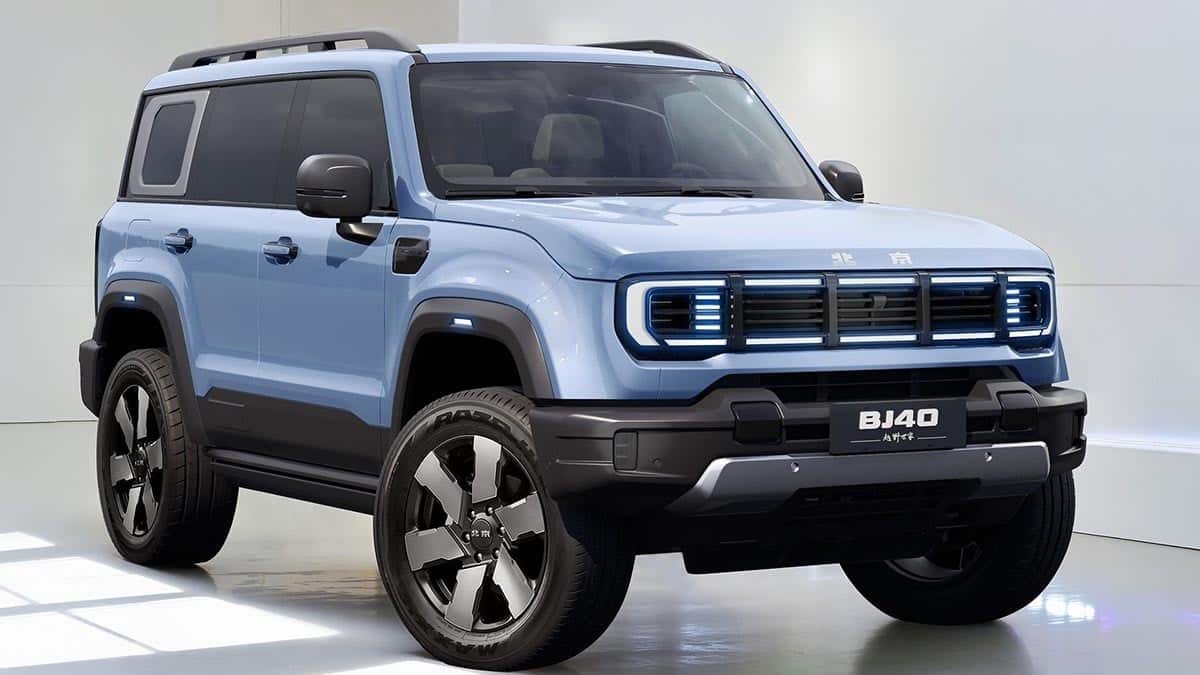
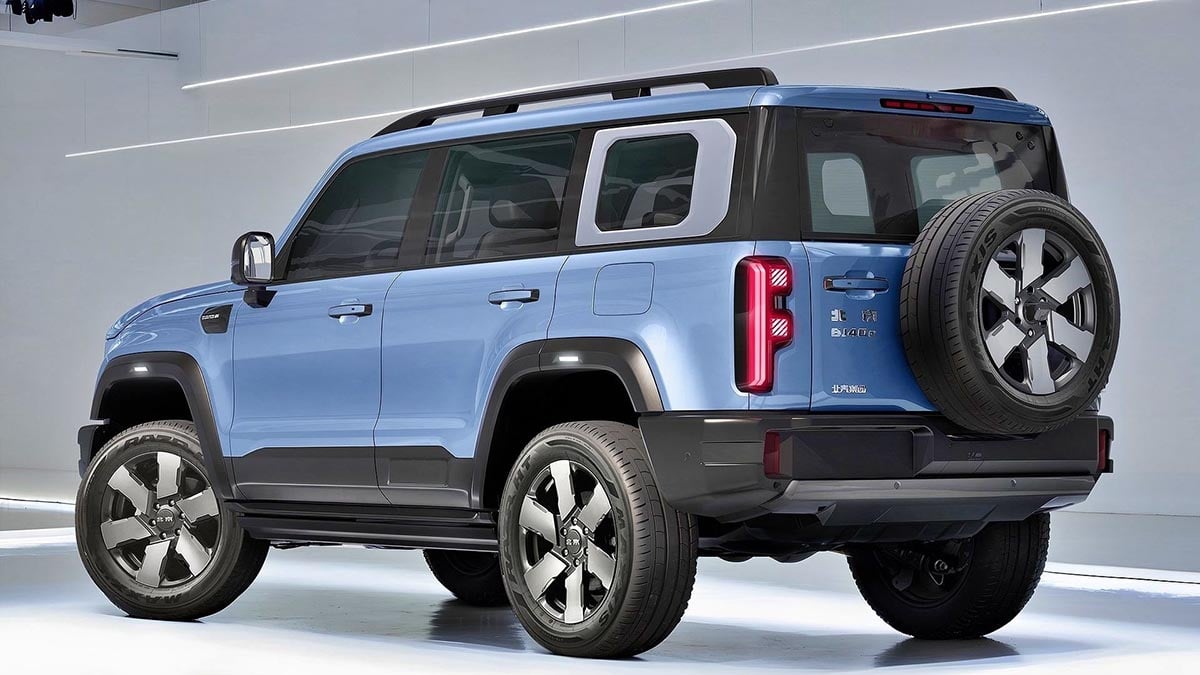
The other flagship model announced by Santana is nothing like a sanitized SUV. It’s a genuine body-on-frame off-roader, derived from the BAIC BJ40, offered in diesel or plug-in hybrid (PHEV) versions. At 15.7 feet long and with its boxy dimensions, it claims a robust, almost military style.
Its off-road capabilities meet purists’ expectations:
- Ground clearance up to 9.8 inches
- Approach, breakover, and departure angles: 38° / 28° / 36°
- Water fording capability: 31 inches
PHEV versions (8.5 inches of ground clearance) lose slightly in off-road capability but gain in refinement for mixed road/trail use. The BJ40 doesn’t try to please everyone, but to occupy a niche left vacant in Europe: that of the true versatile, modern, and still affordable 4×4.
Diesel or Plug-in Hybrid: A Niche but Very Serious 4×4
In a market dominated by SUVs, few models retain a true off-road DNA. The BJ40 will be offered in diesel, probably with traditional mechanical 4×4 transmission, and a plug-in hybrid version equipped with a front combustion engine and rear electric motor, for electrified AWD transmission.
This positioning allows Santana to offer a European alternative to the Jeep Wrangler or Ford Bronco, but at a more competitive price point. The BJ40 should also benefit from different trim levels (classic, off-road, more road-oriented PHEV) to adapt to different uses: professionals, recreation, or off-road enthusiasts.
This model won’t be a bestseller, but it could become a flagship for the brand, reconnecting with Santana’s original spirit, at a time when true 4×4s are disappearing from the European automotive landscape.

