
At a time when performance is measured in kilowatt-hours, Toyota has done the opposite. With its new GR GT, the Japanese brand pays vibrant homage to the sports car in its purest form: a noble combustion engine, racing architecture, and hybrid technology chosen not to check an ecological box, but to elevate the entire package. A manifesto signed by Gazoo Racing, reminding us that automobiles are also about passion and emotion.
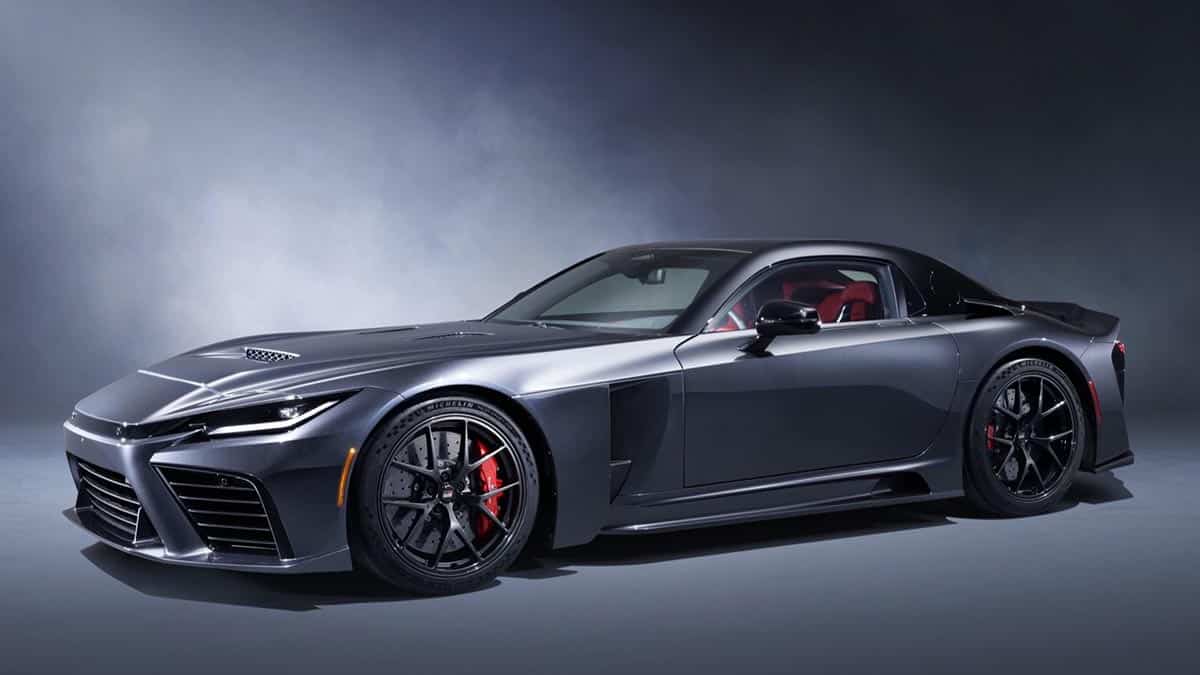
Behind this radical project lies a clear vision: create a race car homologated for the road, capable of competing in FIA GT3 category, while offering total driving pleasure to the most demanding customers. To achieve this, Toyota has implemented a mechanical configuration worthy of the greatest GTs: twin-turbo V8 up front, electric motor and 8-speed gearbox at the rear, with an ultra-optimized transaxle, all within a lightweight chassis based on aluminum and carbon fiber.
The result: 650 hp minimum, 627 lb-ft, rear-wheel drive, 45/55 weight distribution, double-wishbone suspension, and aerodynamics developed to stick to the asphalt up to 200 mph top speed. The GR GT isn’t just a concept or engineering exercise. It’s proof that hybridization can still serve emotions, provided it’s designed for performance rather than regulations.
A Thunderbolt from Gazoo Racing
While most manufacturers focus on the transition to all-electric, Toyota counterattacks where no one expected: with a gasoline-hybrid supercar developed for the track… and homologated for the road. Dubbed the Toyota GR GT, this spectacular newcomer follows a series of concepts and demonstrators that, until now, suggested an impending disappearance of noble engines among mainstream manufacturers. Not so.
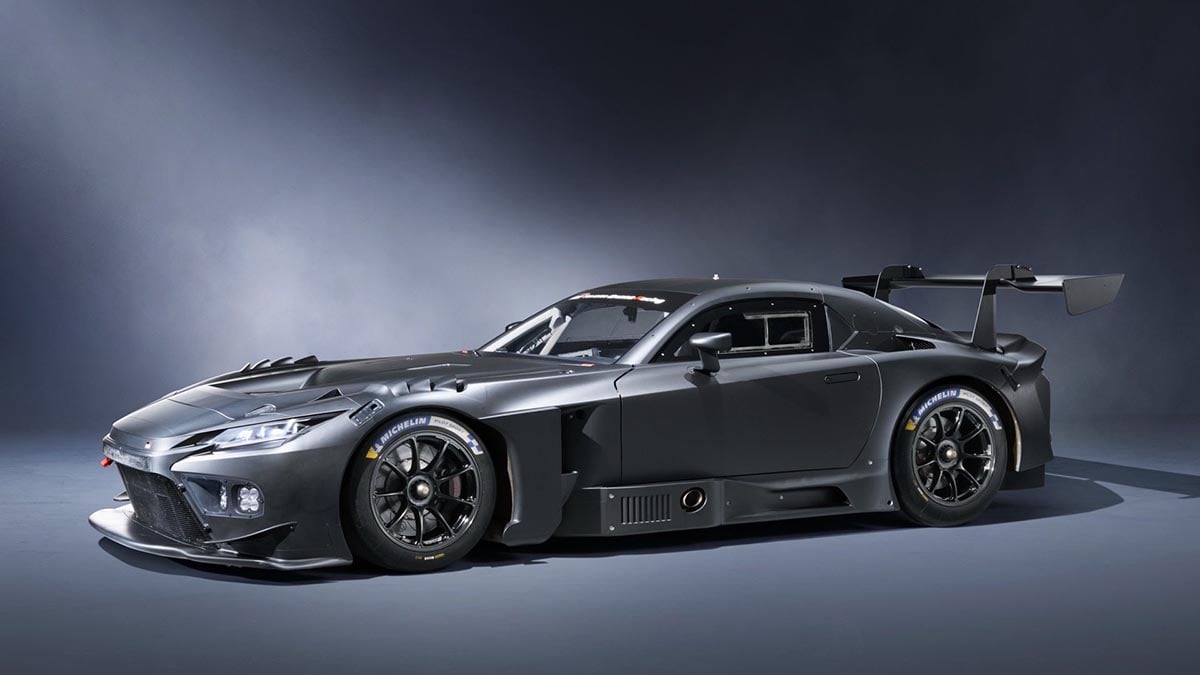
Developed by the Gazoo Racing division, the GR GT doesn’t simply serve as a technological showcase. It clearly targets the FIA GT3 category, with
a clear objective: offer customers a customer racing car capable of excelling in endurance racing, while being able to drive freely on public roads. A dual mission that few models assume at this level of performance.
This Off-Road SUV Arrives in 2026 and Is Worth the Wait: No, It’s Not a Land Cruiser
This positioning makes the GR GT a true anomaly in today’s automotive landscape. In an era of electrified, supercharged GTs weighing over 4,400 pounds, Toyota presents an alternative that’s lighter, more direct, and faithful to sports car fundamentals.
A Purist’s Mechanical Architecture, Designed for Driving
Beating heart of this GR GT: a 4.0-liter twin-turbo V8 with short stroke, delivering at least 650 horsepower and 627 lb-ft of torque. This is an entirely new engine, designed specifically for this project. The forced induction relies on one turbo per bank, in a “hot-V” configuration, with geometry designed for low-end responsiveness and high-speed durability.
But what makes this Toyota so special is its transaxle configuration. The combustion engine is mounted up front, while the 8-speed automatic transmission and electric motor are housed at the rear, integrated into a single unit. This technical choice, rare outside elite GTs, allows for 45% front and 55% rear weight distribution, ensuring stability and agility on track.
The hybrid system isn’t there to reduce fuel consumption, but rather to complement the gasoline engine during acceleration phases, while ensuring maximum energy efficiency. Performance hybridization, designed for pure driving, far from the usual ecological considerations.
A Racing Chassis Homologated for the Road
The GR GT sits on an extruded aluminum structure, onto which carbon fiber and composite material panels are attached. The objective: weight kept under 3,860 pounds, which remains exceptional for a hybrid vehicle of this power level.
The double-wishbone suspension, with aluminum arms, ensures optimal control on track. It’s shared with the competition version, proof that development was conceived in parallel for racing and road use. Braking is handled by carbon-ceramic discs, essential to handle the power and the announced 200 mph top speed.
Everything sits on Michelin Pilot Sport Cup 2 tires, mounted in 265/35 ZR20 front and 325/30 ZR20 rear, built for pure performance. The lowered center of gravity, combined with structural rigidity and worked aerodynamics, positions this GR GT among the most serious sports cars of the coming years.
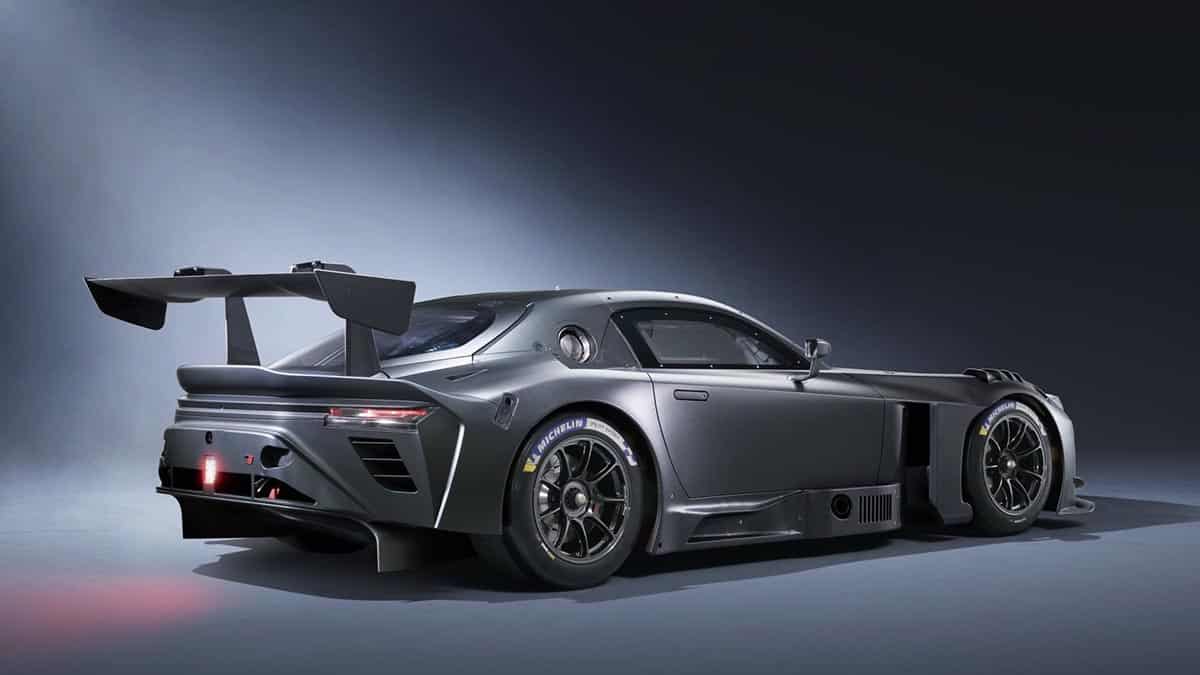
Design Guided by Aerodynamics, Not Trends
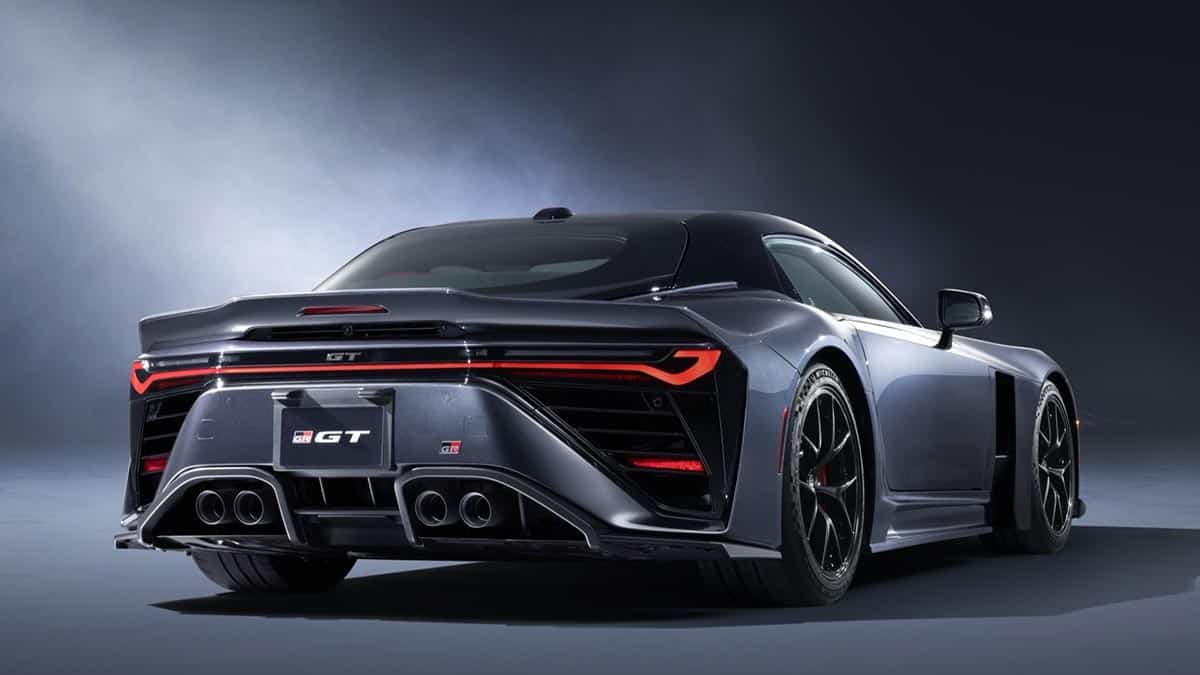
Toyota affirms: the GR GT’s design wasn’t dictated by marketing, but by function. Aerodynamics were prioritized, with the objective of optimizing downforce while ensuring sufficient cooling for thermal and electrical components. It’s from this specification that the bodywork was designed, measuring 189.8 inches long, 78.7 inches wide and just 47.2 inches tall.
The sharp lines, integrated air intakes, extractors, and active elements are there to optimize airflow, reduce turbulence and improve high-speed stability. No artifice, just aerodynamic efficiency serving performance.
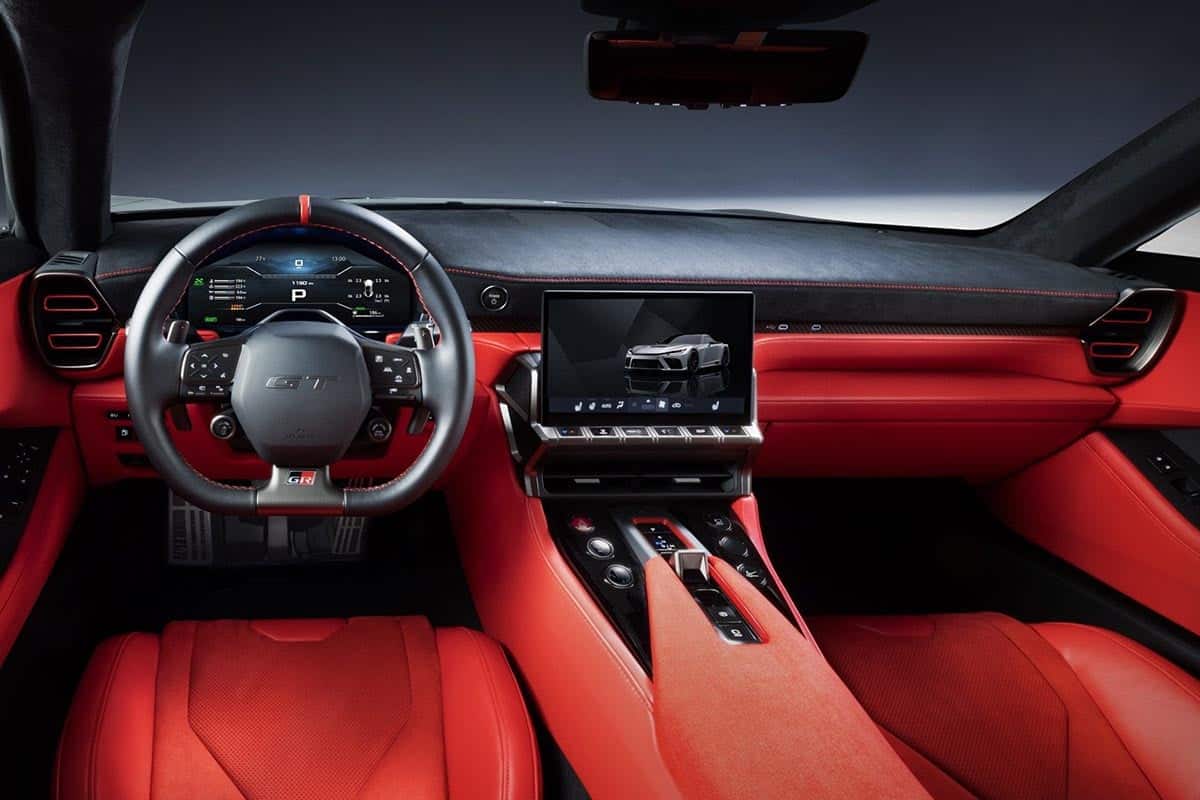
In the cabin (not yet revealed in detail), everything indicates a driver-focused approach: bucket seats, minimalist interface, physical buttons for driving settings. Toyota announces several levels of electronic adjustments, allowing adaptation of ESP response, steering and braking according to the driver’s experience level.

