
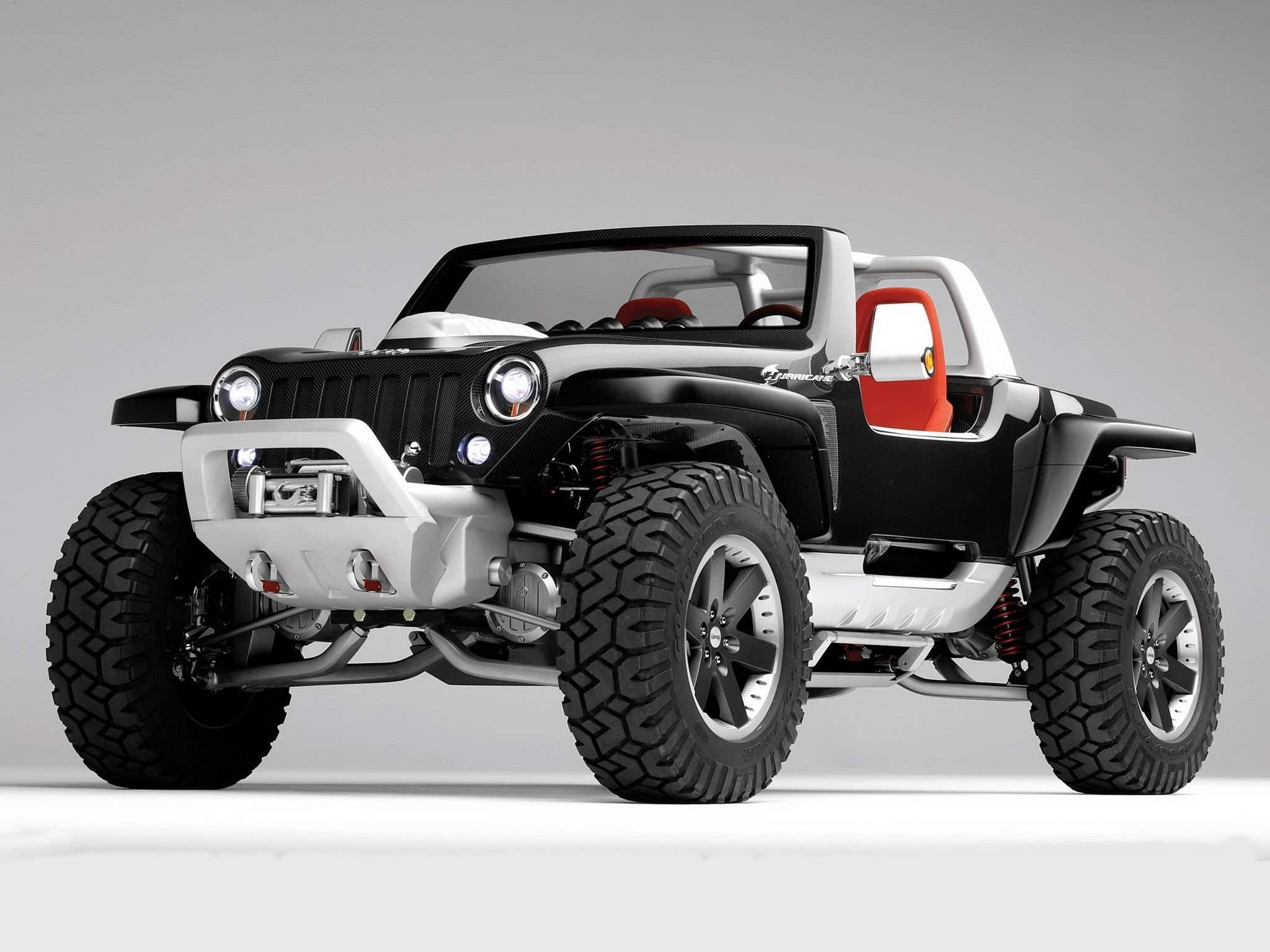
In an automotive world that’s sometimes too sensible, there are machines that seem straight out of the imagination of an engineer who forgot the concept of compromise. The Jeep Hurricane Concept, unveiled in 2005 at the Detroit Auto Show, belongs to this rare breed: concept cars that are as wild as they are functional. A Jeep without a roof, without doors, with two V8s under the hood and the ability to spin in place. Nothing less.
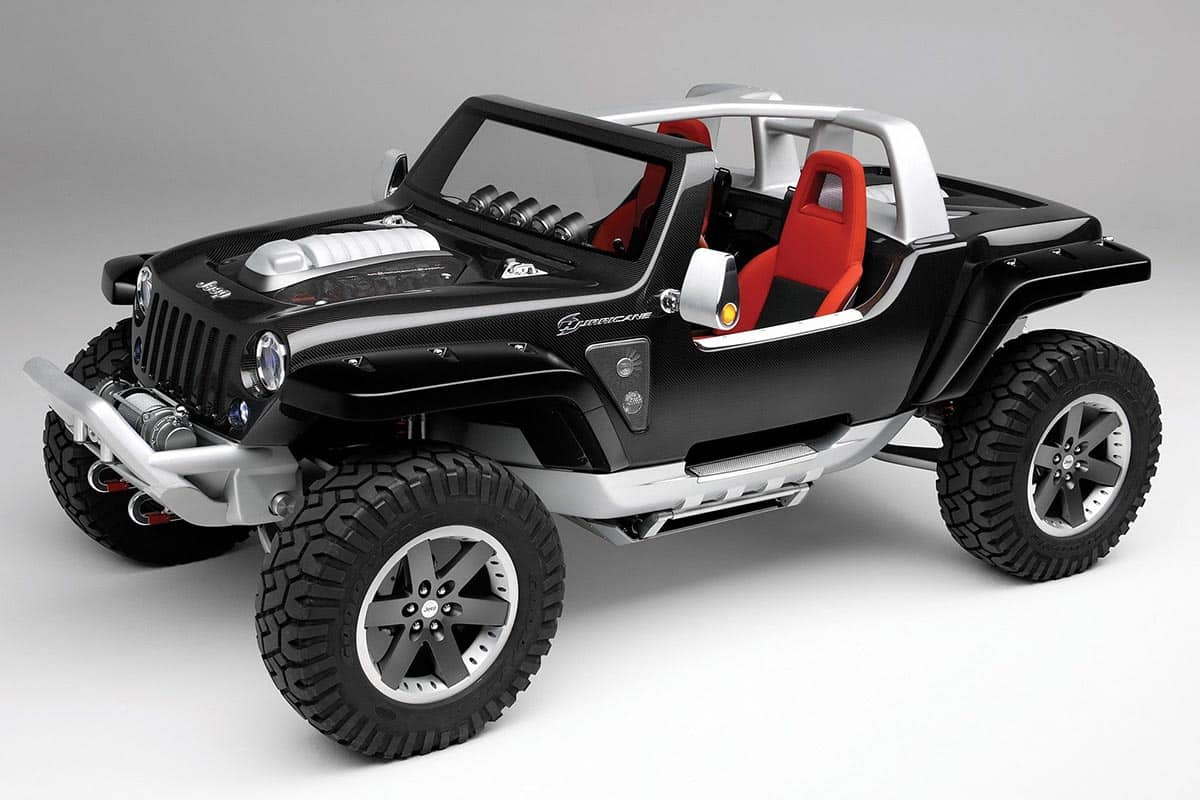
Conceived as a technology demonstrator by the Chrysler Group, this Hurricane is an extreme answer to the question: “What if we took Jeep’s DNA to its absolute limit?” Carbon monocoque structure, long-travel suspension, four independent steering wheels, and above all, a multi-displacement system that dynamically deactivates certain cylinders to adapt to terrain… the Hurricane accumulates innovations and superlatives.
German engine at Chinese price: this $22,770 compact breaks the market
But what makes the Jeep Hurricane truly unforgettable is its stylistic and technical audacity, assumed from end to end. It doesn’t seek to seduce, it imposes a raw, radical, almost military vision of off-roading. A mechanical fantasy that would remain without direct descendants, but whose aura still floats over show stands, 20 years later.
Hurricane’s Raw DNA: A Jeep Without Roof or Doors
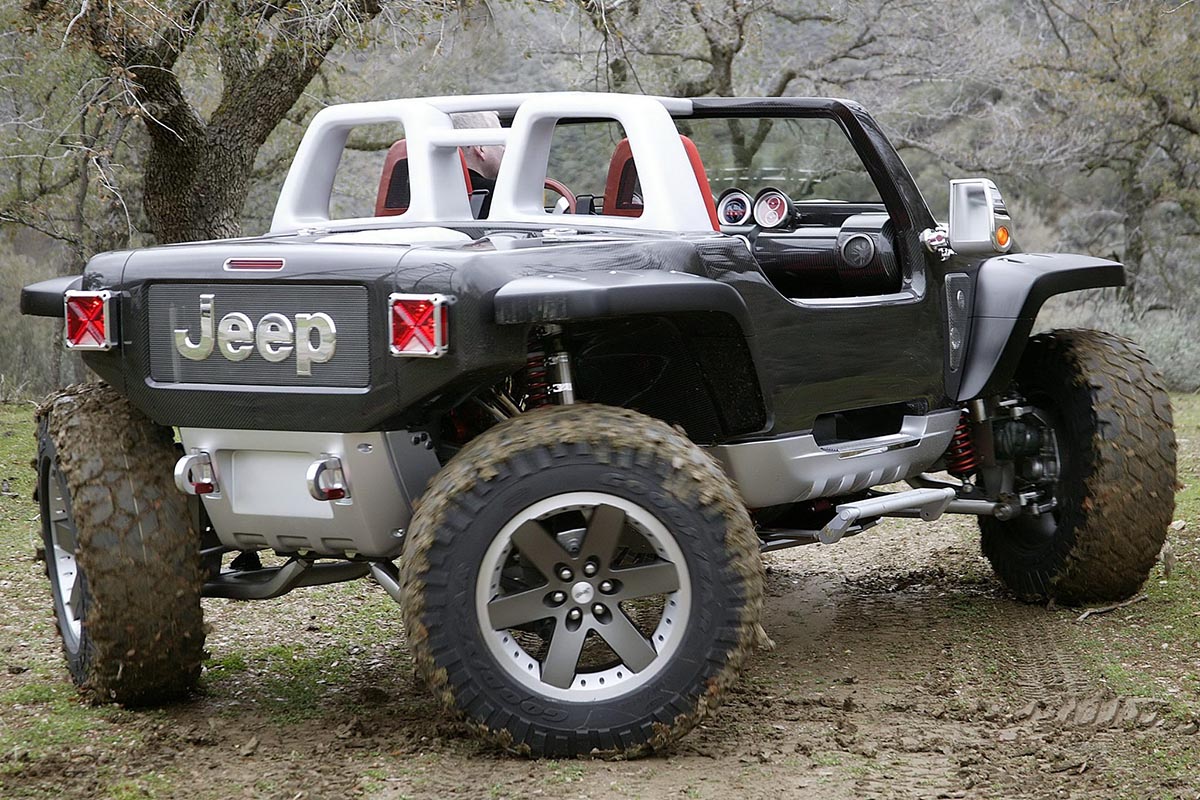
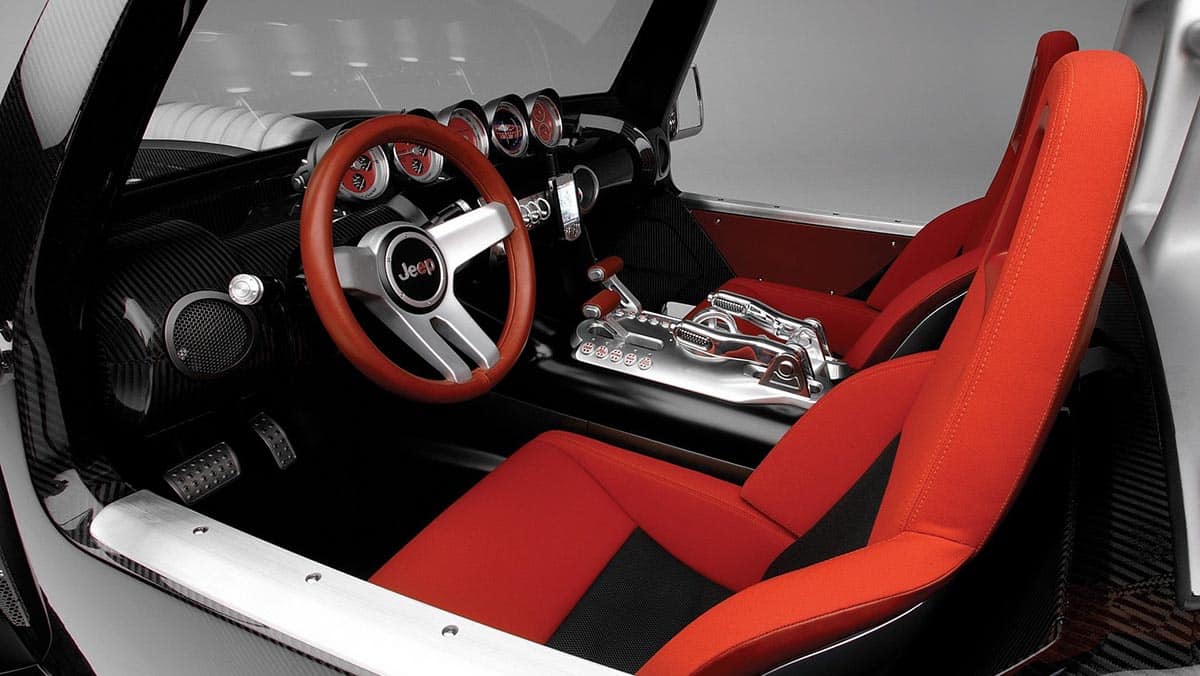
No Jeep has ever been as stripped down as the Hurricane Concept. Here, no traditional windshield, no roof, no doors. Just an ultra-light central cell in carbon fiber, bucket seats mounted on an exposed floor, and a structure conceived as an exoskeleton. The look evokes both original military jeeps and racing buggies.
This extreme visual philosophy is accompanied by a monocoque chassis entirely made of composite materials and aluminum, a first for Jeep at the time. The design is signed by Aaron Pizzuti, already the author of the Dodge Challenger Concept’s look. The whole thing breathes robustness, aggressiveness… and a total absence of compromise.

Twin HEMI V8s + Multi-Displacement: Power Adaptable to Terrain
The heart of the Hurricane consists of two 5.7-liter HEMI V8s. Each drives an axle (one front, one rear), developing a combined power output of 670 horsepower and 740 lb-ft of torque. But this isn’t just raw power madness.
Thanks to an intelligent cylinder deactivation system, the Hurricane is capable of running on 16, 12, 8, or just 4 cylinders, depending on load and momentary needs. This technology, innovative at the time, foreshadowed modern active displacement management systems used today to limit fuel consumption.
All this is coupled to a 5-speed automatic transmission, with short ratios designed for crawling.
Revolutionary ALL-WHEEL STEER: Crab-Mode and Zero Turning Radius
The Hurricane’s other major feat is its total four-wheel steering system. Here, all four wheels can turn in opposite or identical directions. In “crab” mode, all wheels orient in the same direction to slide the vehicle laterally. But the real innovation is the spin-in-place mode.
At compact car price, this electric SUV promises 620,000 miles of range
Thanks to electronic control, the left wheels turn forward while the right wheels turn backward. Result: the Hurricane spins on itself, literally, with a turning radius of zero feet. A capability never seen again on any production model, pushing the limits of off-road maneuverability.
Demonic Performance: 0-62 mph in 4.9s, 14.3 inches of Ground Clearance
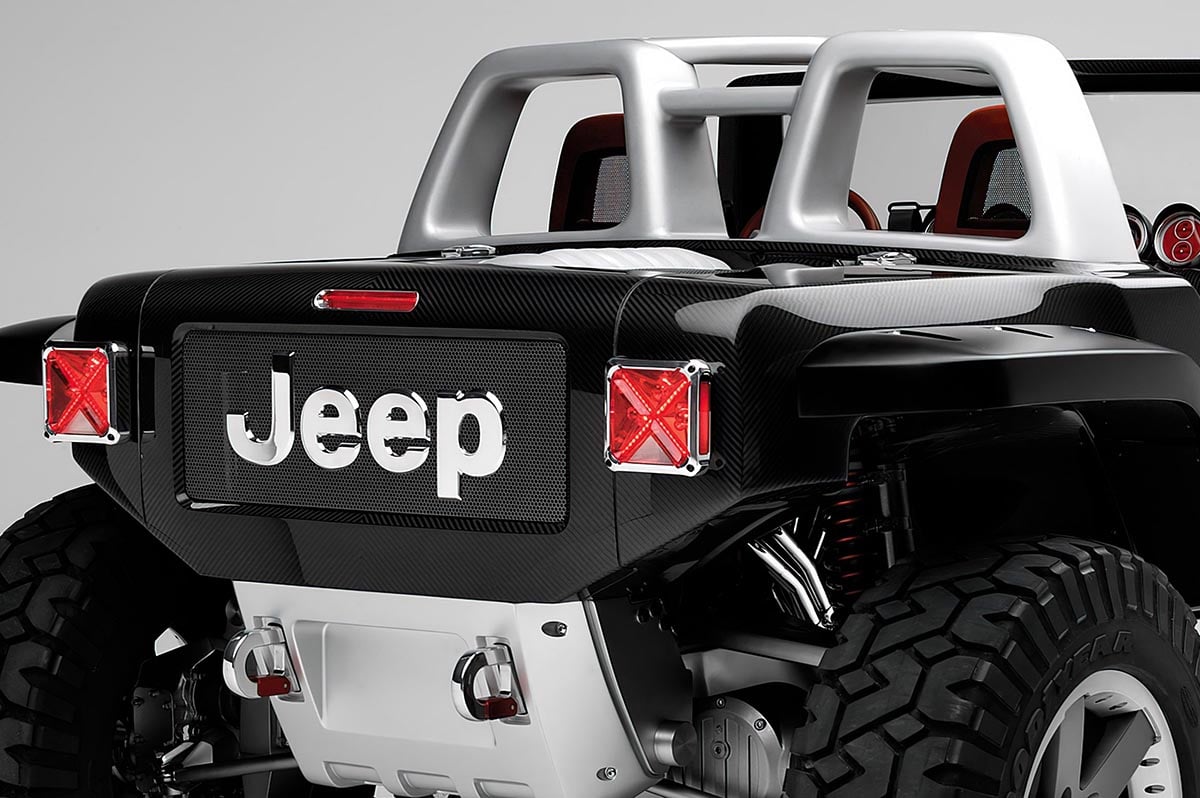
Despite its contained weight (about 5,500 lbs), the Hurricane claims a 0 to 62 mph time of 4.9 seconds, quite a feat for a machine this wide (6.2 ft) and tall. It rides on 37-inch tires, with forged wheels, and 14.3 inches of ground clearance.
Its approach and departure angles are equally impressive: 64° front, 86.7° rear. Numbers that far exceed those of the most capable Jeep Wrangler Rubicons. With long-travel suspensions and rudimentary electronics, the Hurricane prioritizes pure mechanical crawling ability.
A Model of Conceptual Creativity, but… Limited to 1 Prototype
The Hurricane remained a unique concept, never intended for production. Yet its audacity and creativity earned it multiple awards, including the IDEA Award for Design Excellence and selection in Popular Science‘s innovation rankings.
While no production Jeep has ever adopted its extreme architecture, certain elements like active displacement management and the philosophy of functional minimalism have inspired the brand’s future models. The Hurricane remains to this day one of the most iconic concept cars ever produced by an American manufacturer.

