
After two years of post-pandemic recovery, 2025 marks a form of stabilization for the French automotive market… but also a slowdown. With just under 1.46 million passenger cars registered for the year, the market shows a decline of approximately 4.9% compared to 2024. A moderate but significant drop that reflects a tense economic context, still-high interest rates, and customers increasingly focused on utility-to-price ratio.
In this contrasted landscape, it’s the hybrid powertrains that come out ahead. Supported by an ever-expanding lineup, simple hybrid or plug-in hybrid models are gradually eating into market share from 100% combustion vehicles. On the other hand, electric cars, while growing, still struggle to cross a decisive threshold, held back by prices, delivery delays, and a charging infrastructure that remains incomplete in certain regions.
On the sales podium, the hierarchy remains familiar: Renault Clio, Peugeot 208, and Dacia Sandero lead the dance, proving that the French remain loyal to the sure values of the B-segment. City cars, compact, practical, and affordable, thus maintain their supremacy, despite the continued offensive of SUVs. The year 2025 confirms a trend: the French market is evolving, but without radical upheaval, still marked by buyer caution regarding the energy transition.

A French market in slight decline despite some months of rebound
The year 2025 ended with an overall decline in the French automotive market, with approximately 1,459,000 new cars registered, a drop of about 4.9% compared to 2024. After two years of post-COVID recovery, this decline reflects a still-constrained economic environment: persistent inflation, more expensive financing, political and fiscal uncertainties. However, certain months showed positive signs, like October, where registrations increased by 2.9%.
This irregular dynamic illustrates the fragility of recovery, particularly among individuals, who remain cautious. Companies, for their part, continue to feed an important portion of volumes, particularly in electrified segments. In parallel, the used vehicle market remains active, attracting customers seeking more accessible solutions, increasing pressure on new car sales.
French manufacturers have nonetheless resisted: Renault, Peugeot, and Dacia maintain strong positions in monthly rankings, supported by a wide lineup well-adapted to domestic demand. But Asian brands – notably Toyota, Hyundai, and Kia – confirm their foothold in France, thanks to hybrid models well-positioned in price and fuel economy.

Hybrids rising, combustion engines declining, electrics waiting
One of the striking facts of 2025 is the constant progression of hybrid powertrains, which are taking an increasing place in new vehicle sales. Now widely available in B and C segments, they offer a credible alternative to gasoline models, without the charging constraints of a 100% electric vehicle. Result: full hybrid and mild hybrid models now occupy a major part of the energy mix, particularly at Toyota, Renault, and Suzuki.
Conversely, traditional combustion models are slowly but surely declining. Gasoline remains the majority but loses ground each month, while diesel continues its fall, now confined to commercial vehicles and a few family models. This shift is explained as much by taxation as by the evolution of usage patterns, increasingly centered on urban and suburban trips.
100% electric vehicles continue their progression, but at a more measured pace. Their market share exceeded 16% during certain periods, thanks to the rise of models like the Renault Mégane E-Tech, Tesla Model Y, or Peugeot e-208. However, the barrier of purchase price, the question of restricted federal tax credits, and charging station deployment remain obstacles. The threshold of mass volumes has therefore not yet been crossed.

2025 top sales: city cars keep their throne
Despite market changes, the top trio remains unchanged. The Renault Clio climbed to the top of the podium in 2025, closely followed by the Peugeot 208 and the Dacia Sandero. These three models, emblematic of the B-segment, confirm that the French remain loyal to practical and versatile city cars, particularly adapted to daily reality.
Behind this trio, we find models like the Peugeot 2008, the Renault Captur, or the Toyota Yaris Cross, which embody the rise of small urban SUVs. These vehicles appeal for their elevated driving position, modern image, and attractive hybrid offerings.
On the electric side, the Tesla Model Y maintains its best-seller position in the segment, despite the arrival of more compact models like the MG4 or Dacia Spring. The offering is expanding but remains concentrated on certain customer segments, notably professionals or households benefiting from targeted incentives.
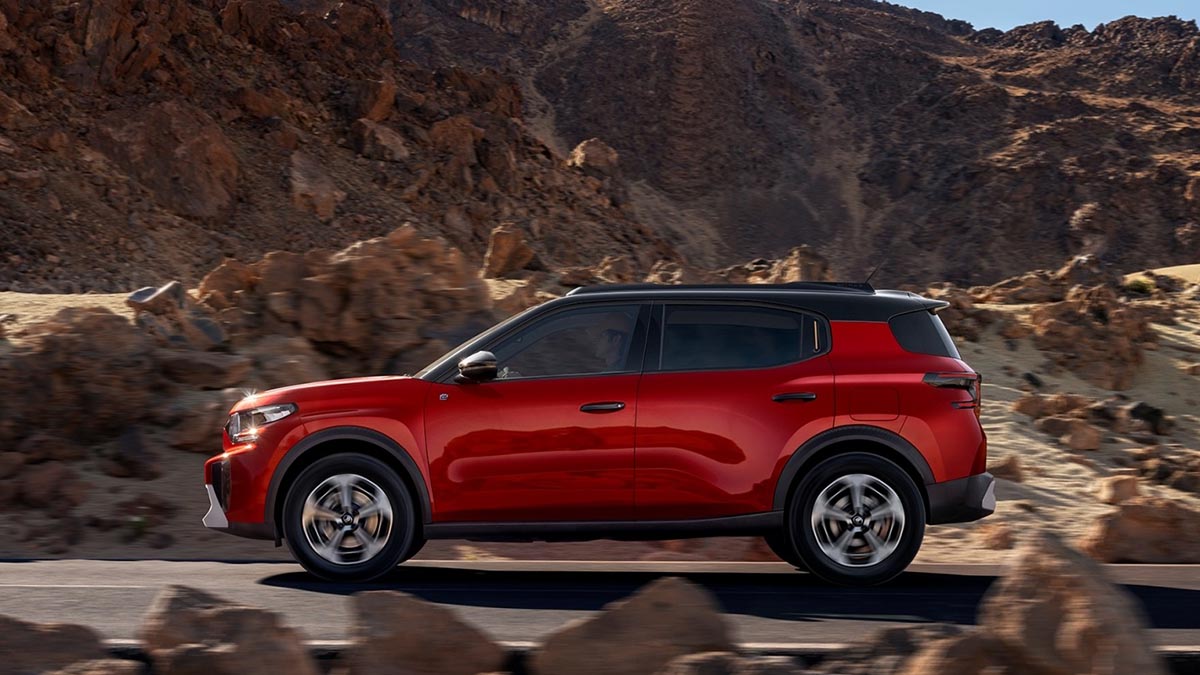
Top 10 new cars in France in 2025: city cars lead, SUVs still solid
The 2025 ranking confirms a structural trend in the French market: the persistent domination of versatile city cars, to which several well-established urban SUVs are added. Despite technological changes and the progressive electrification of the fleet, French buyers remain mostly attached to vehicles that are practical, compact, and economical both to purchase and use.
At the top of the ranking, the Renault Clio V leads with over 100,000 units sold for the year, a comeback that’s notably explained by the arrival of restyled versions and the expansion of the hybrid lineup. It beats the Peugeot 208, its eternal rival, which remains a sure value for the general public, including in electric version. The Dacia Sandero, with over 64,000 registrations, completes the podium thanks to an unbeatable pricing position.
Here is the Top 10 best-selling cars in France in 2025:
| Rank | Model | Estimated Volume |
|---|---|---|
| 1 | Renault Clio V | ≈ 100,101 units |
| 2 | Peugeot 208 | ≈ 73,092 units |
| 3 | Dacia Sandero | ≈ 64,399 units |
| 4 | Peugeot 2008 | ≈ 54,634 units |
| 5 | Citroën C3 IV | ≈ 41,127 units |
| 6 | Renault Captur | ≈ 39,000 (est.) |
| 7 | Toyota Yaris Cross | ≈ 37,000 (est.) |
| 8 | Renault 5 E-Tech Electric | ≈ 35,000 (est.) |
| 9 | Peugeot 3008 | ≈ 34,000 (est.) |
| 10 | Dacia Duster | ≈ 32,000 (est.) |

2026 prospects: between caution and controlled electrification
For 2026, manufacturers expect market stabilization, without major rebound. The economic context remains tense, with high interest rates and pressure on household budgets. Purchase choices will therefore be even more rational, favoring reliable, well-equipped vehicles that are inexpensive to operate.
The transition toward electrification will continue, but in a more measured framework. Hybrids should continue to gain ground, while electric models will have to face the progressive end of incentives, tightening environmental criteria, and the rise of Chinese models, more aggressive on pricing.
Finally, 2026 will be marked by the arrival of new French models (Renault 5, Citroën ë-C3, Peugeot e-3008) intended to democratize electric vehicles and relaunch positive momentum. But their success will closely depend on public policies, electricity prices, and the charging network’s ability to meet demand.

