
We’re a far cry from the ForTwo and ForFour that built Smart’s reputation. With the Smart #6, the brand born in the 90s under the aegis of Swatch and Mercedes is taking a radical turn, dictated by its relaunch under the Mercedes-Benz and Geely duo. This new model, measuring nearly 16 feet long, stands as the largest car ever produced by Smart—a prestigious three-box sedan, designed primarily for China, but which could very well arrive in the US.
This offensive is strategic: Smart is aligning with Chinese market trends, where large sedans are making a strong comeback, particularly among local manufacturers (BYD, Nio, etc.). By entering this segment with a premium product, Smart aims to change its image and target a more affluent audience, more tech-savvy and family-oriented than in the past. The approach is reminiscent of MG or even Tesla with the Model S, both having transitioned from urban agility to long-distance range.
With the #6, Smart also demonstrates that it’s no longer limited to being a micro-mobility brand. This is a model with bold design, equipped with cutting-edge onboard technologies, premium materials, and technical content that far exceeds C-segment standards. It’s an assumed change of direction, and probably irreversible.
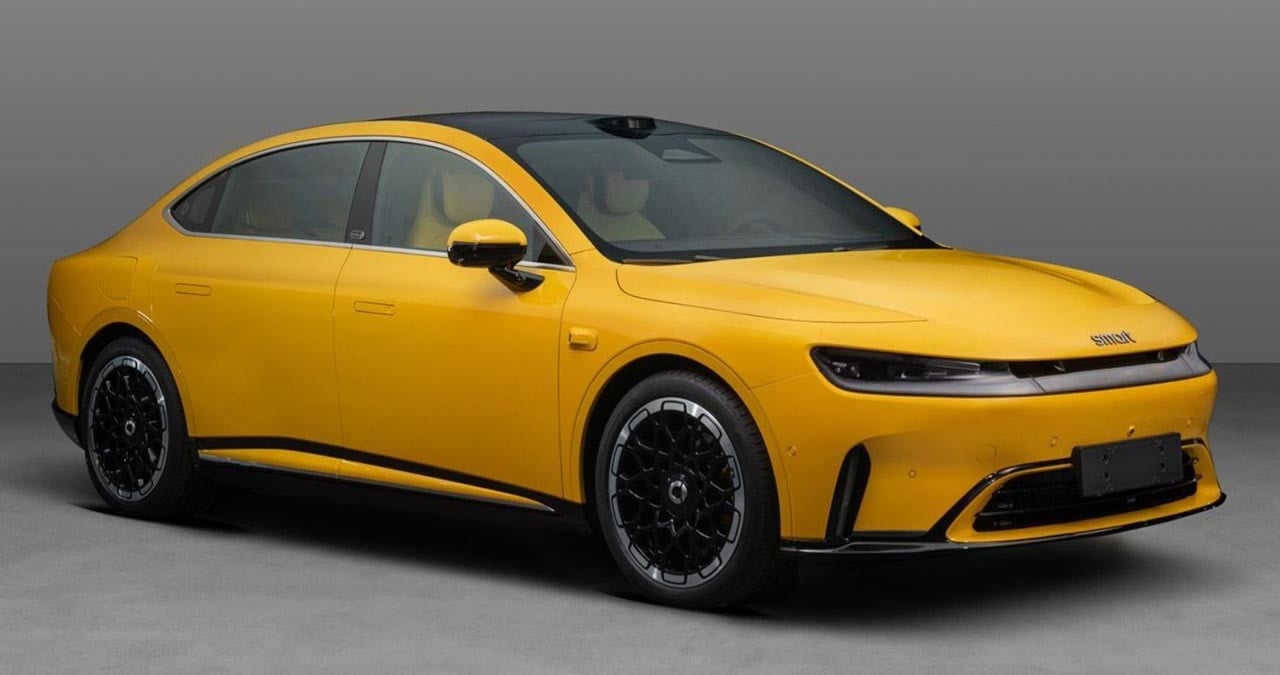
A super-powerful and ultra-efficient plug-in hybrid powertrain
Under the hood of this Smart #6, we discover specifications very far from the brand’s tradition. The model is based on an EREV (Electric Range Extended Vehicle) platform, in other words a range-extended plug-in hybrid. The main engine is a 1.5-liter turbo gasoline unit, combined with a high-performance electric motor. Result: a combined output of 429 horsepower, enough to catapult this large sedan into the dynamic vehicle category.
But the real argument remains the announced range. Thanks to a 40.9 kWh lithium-ion battery and its secondary combustion engine, the Smart #6 can travel up to 1,125 miles according to the Chinese CLTC cycle, including about 177 miles in electric-only mode. Figures to be taken with caution, but which clearly illustrate the ambition: to offer a vehicle capable of long trips without charging anxiety, while allowing 100% electric use for daily commutes.
Charging is also optimized, with a 21 kW AC charger and DC compatibility up to 100 kW, allowing the battery to be recharged in about 30 minutes on a fast charger. An intelligent positioning that targets mixed users: those who want an electric vehicle for daily use but refuse constraints on highways or in rural areas.
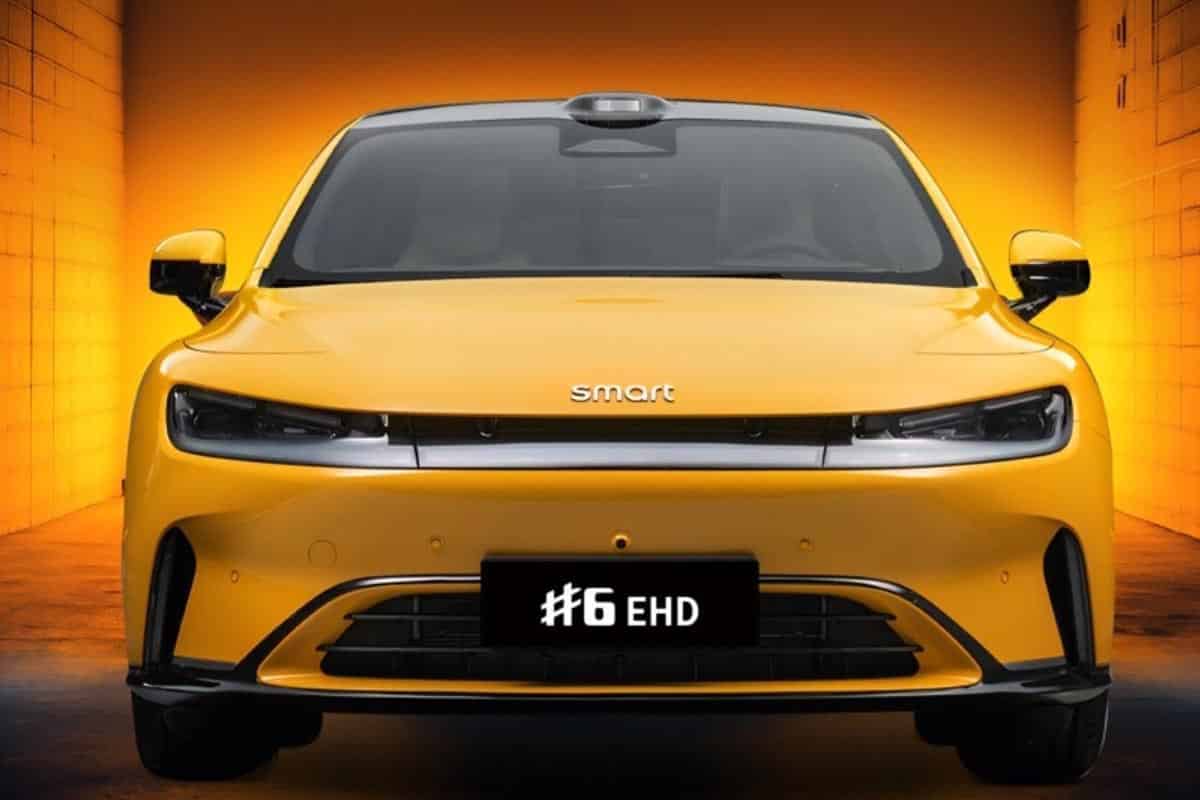
A large sedan with prestigious styling and high-end technology
The style of the Smart #6 definitively breaks with past models. Gone is the minimalist silhouette of city cars, replaced by a fluid, elegant, but massive and prestigious design, in line with new-generation Chinese sedans. The lines are taut, with a low hood, elevated beltline, and muscular rear. The surface treatment and LED lighting provide an undeniable visual presence, reinforced by a long wheelbase that guarantees generous habitability.
The interior also aims to be premium, with a floating digital dashboard, a heads-up display, and an AI-powered intelligent interface to manage driving, entertainment, and navigation functions. Comfort isn’t forgotten, with massaging seats, premium materials, and careful soundproofing.
Smart also promises next-generation connectivity, with OTA updates, full wireless Apple CarPlay/Android Auto compatibility, and an intelligent voice assistant. The onboard system would be based on an interface co-developed with Geely, offering speed, customization, and security. In short, a real qualitative leap for a brand long confined to entry-level products.
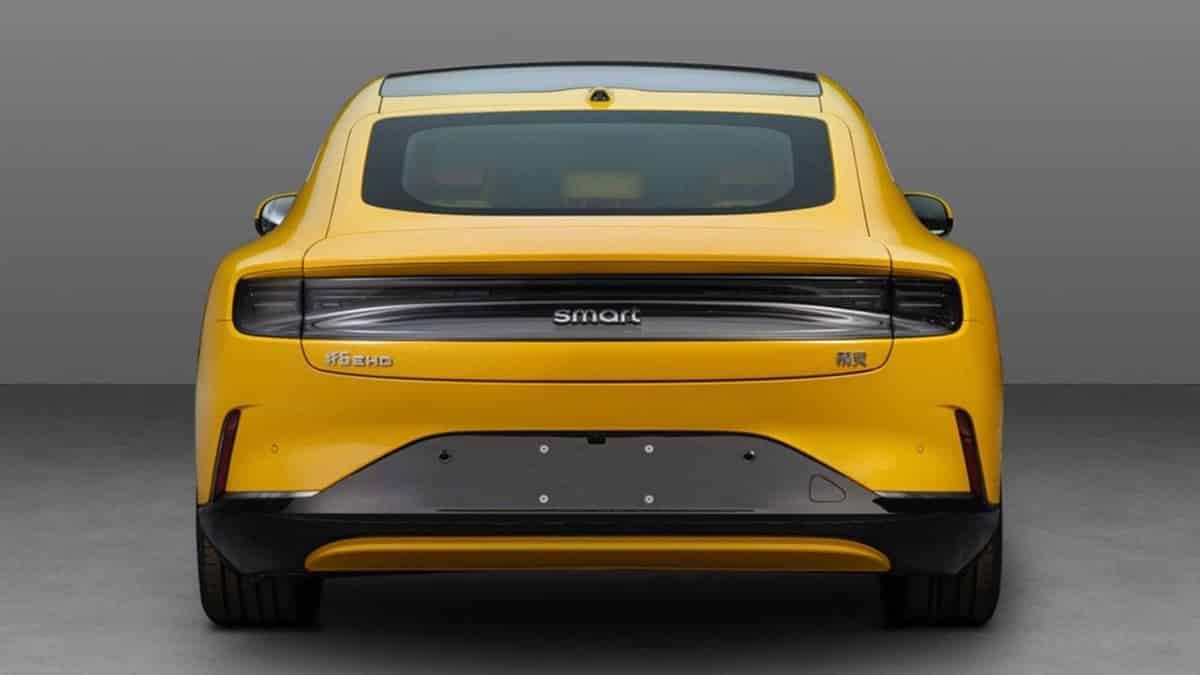
Towards global commercialization, with 100% electric version to come
While the Smart #6 is primarily designed for China—where it will be produced locally—Mercedes and Geely don’t rule out US commercialization by late 2026. For the American market, it’s likely that the plug-in hybrid version will remain exclusive to China, and that the US will rather benefit from a 100% electric version, better adapted to local emission standards.
The arrival of this sedan in America would allow Smart to reinvest in the large touring car segment, where competition is fierce, but where few manufacturers offer an electric alternative at a reasonable price. However, we’ll need to observe the pricing strategy. In China, the Smart #6 could be offered around 250,000 yuan (about $35,200), but in the US, homologation and import costs could logically drive this price higher.
Regardless, with this model, Smart is no longer simply a manufacturer of urban cars. The brand is now part of the movement toward premium electrified sedans, with an ambitious, technologically advanced product potentially capable of challenging Tesla, BMW i5, or Hyundai Ioniq 6. The transformation is underway.

