
The 2027 Nissan Rogue Hybrid introduces a braking feature designed to make everyday stops smoother, alongside quieter cabin engineering and updated driver-assistance technology. Nissan is emphasizing passenger comfort rather than simply adding more screens or convenience features.
Nissan has detailed three areas of refinement in its 2027 Rogue Hybrid: noise reduction, smoother braking and more intuitive technology. The most distinctive addition is Smooth Stop, a system that automatically adjusts braking pressure as the vehicle comes to a complete stop.
The announcement follows Nissan’s earlier confirmation of the Rogue Hybrid’s U.S. rollout schedule. Rather than introducing another version of the crossover, the latest information explains how Nissan has engineered the hybrid to feel more comfortable in everyday driving, particularly in traffic and at highway speeds.
Smooth Stop Automatically Reduces Braking Pressure
The 2027 Rogue Hybrid introduces what Nissan describes as first-in-class Smooth Stop technology. Its purpose is to reduce the forward-and-backward movement passengers sometimes experience when a vehicle finishes braking.
Drivers can produce a similarly gentle stop by gradually releasing brake pressure as the vehicle slows. Nissan’s system is designed to perform that adjustment automatically, without requiring the driver to carefully modulate the pedal.
According to Nissan, the driver simply presses and holds the brake pedal while Smooth Stop manages the final phase of deceleration.
The distinction matters because the system is not presented as an automatic emergency braking feature or a replacement for normal driver control. It is a comfort function intended to improve the final moments of an ordinary stop.
Nissan also highlights the Rogue Hybrid’s e-Pedal functionality, which allows drivers to control acceleration and deceleration primarily through the accelerator in certain conditions. Unlike Smooth Stop, which operates when the driver applies the brake pedal, e-Pedal focuses on reducing the need to switch between pedals during routine driving.
The two technologies address different aspects of low-speed driving, although Nissan has not provided independent measurements showing how much Smooth Stop reduces passenger movement.
Nissan Targets Road, Wind and Even Seat Ventilation Noise
Cabin quietness was another development priority. Nissan says engineers placed sound-deadening materials in areas particularly exposed to road noise, including the wheel wells.

The exterior also incorporates several features intended to reduce aerodynamic noise. These include concealed windshield wipers, door-mounted side mirrors and slim roof rails.
One less obvious change concerns the available ventilated front seats. Nissan says their revised design reduces operating noise, addressing a sound source that can become more noticeable in an otherwise quiet cabin.
Derek Johnson, a research and development engineer at Nissan Technical Center North America in Farmington Hills, Michigan, explained that the engineering team prioritized a comfortable environment in which passengers in both rows could converse at highway speeds.
The Rogue Hybrid also features Nissan’s Zero Gravity seats and, according to the manufacturer, more front headroom than competing hybrids in its class. The headroom comparison is a manufacturer claim, and Nissan’s announcement does not provide the underlying measurements.
Although these changes indicate where Nissan concentrated its development efforts, the company has not supplied comparative cabin-noise measurements in decibels. The actual improvement over competing crossovers therefore remains unquantified.
Standard ProPILOT Assist and Available Dual 14.3-Inch Displays
All 2027 Rogue Hybrid models include the latest generation of Nissan’s ProPILOT Assist driver-assistance system.
The standard version can help maintain the vehicle’s position within a lane and follow surrounding traffic while the driver keeps their hands on the steering wheel. It remains a driver-assistance system rather than autonomous driving technology.
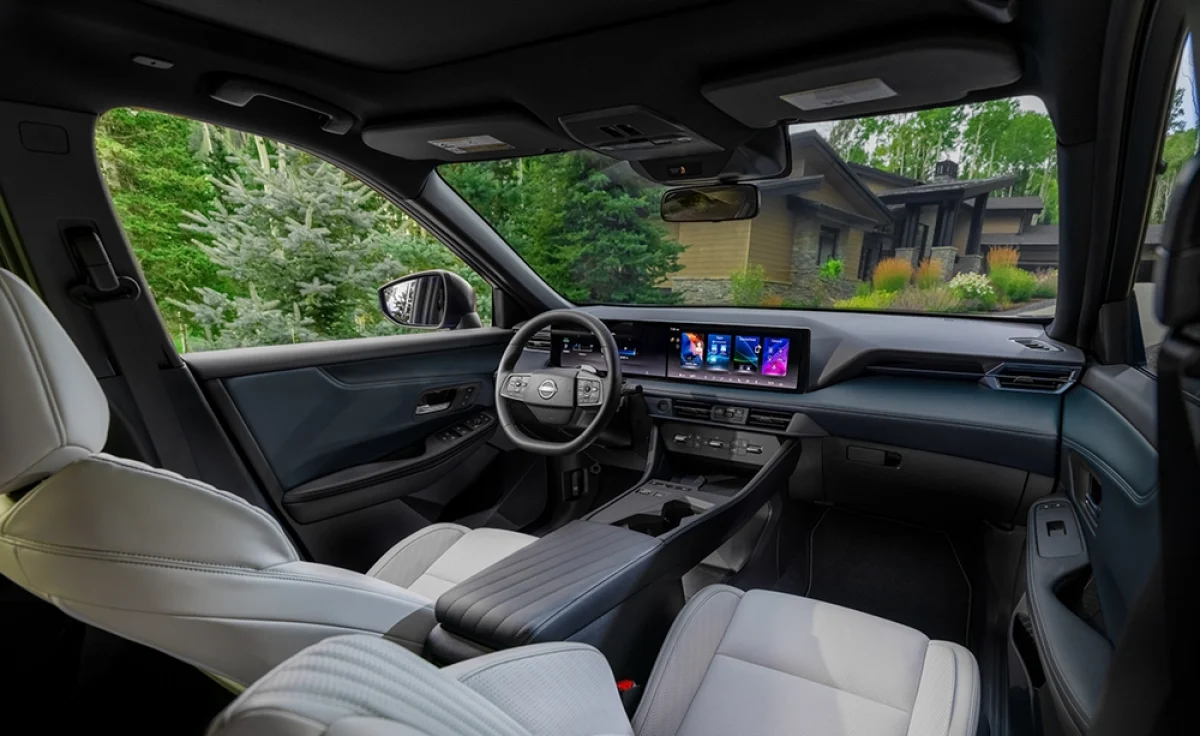
Inside, Nissan offers dual 14.3-inch displays, while Apple CarPlay and Android Auto are standard. The Rogue Hybrid also includes a standard Qi2 wireless phone charger, which Nissan describes as a class-exclusive feature.
These additions are intended to make frequently used functions more accessible, although the availability of the larger displays depends on equipment selection.
The combination of standard driver assistance, wireless charging and available larger displays gives the Rogue Hybrid a broader technology package, but the new Smooth Stop system is the more unusual engineering development. It targets a specific aspect of everyday vehicle behavior that conventional equipment lists rarely address.
Nissan’s latest announcement does not establish how the braking system performs in independent testing or quantify its advantage over conventional braking. Those questions will require driving evaluations rather than manufacturer descriptions alone.

