
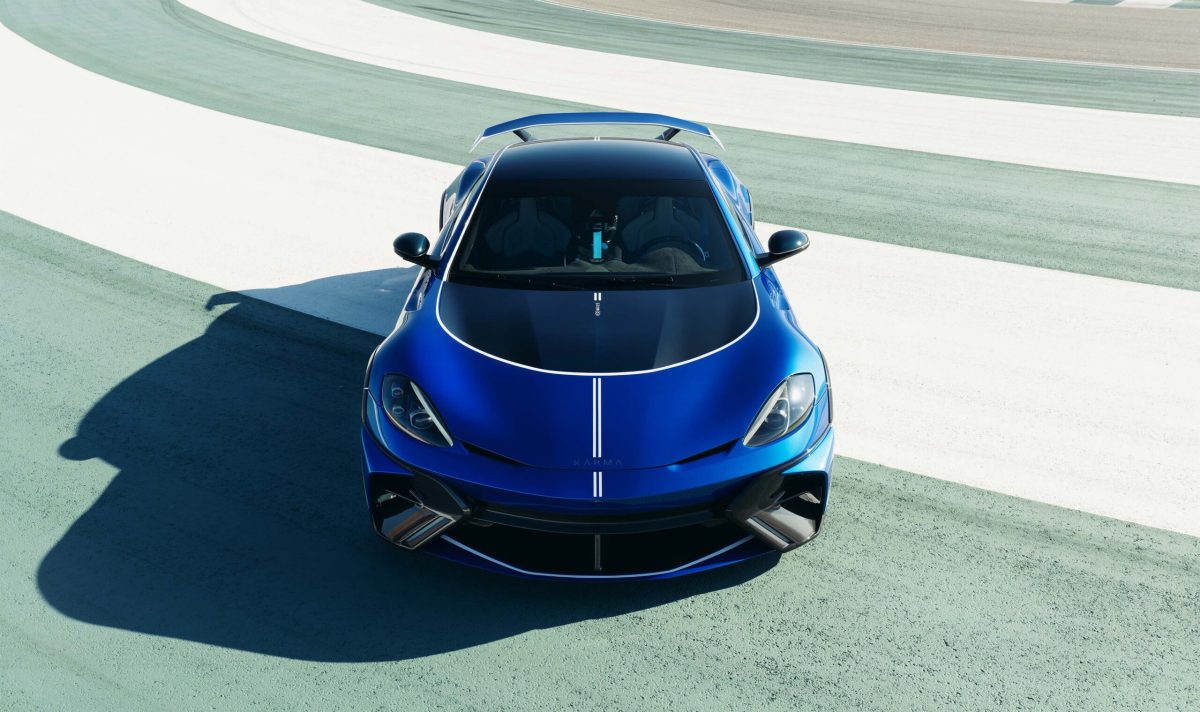
Karma Automotive has turned its Revero-based hybrid architecture into a nearly 1,200-hp track-focused machine, replacing the familiar three-cylinder gasoline generator with a 6.2-liter V8. The Eximius 1 is also the first demonstration of a new customization program that extends beyond paint and upholstery to fundamental mechanical changes.
Unveiled on October 31, 2026, at the Concours at Wynn Las Vegas, the Eximius 1 is being developed for an undisclosed customer who already owns a Karma Revero. The four-seat vehicle is scheduled for delivery in 2027, with development continuing alongside its commissioning client.
The more consequential announcement is the Eximius program itself. California-based Karma Automotive is offering customers the opportunity to work directly with its engineers and designers on unique vehicles, including modifications to bodywork, performance systems and powertrains. Unlike a conventional special edition, the Eximius 1 demonstrates how extensively the company is prepared to alter an existing platform.
A 6.2-Liter V8 Changes the Revero’s Hybrid Formula
The standard Revero uses a turbocharged three-cylinder gasoline engine as a generator in a series-hybrid system, with electric motors providing propulsion. The Eximius 1 retains the broader plug-in series-hybrid concept but substitutes a much larger 6.2-liter V8.
BMW Alpina B7 coming 2027: V8 engine signals a different path from parent company
Karma specifies 550 hp for the combustion-engine component and 645 hp for the battery-powered portion of the system, giving a quoted combined figure of 1,195 hp. The manufacturer also identifies an axial-flux generator as part of the new hybrid architecture.
Those figures require an important distinction: the V8’s quoted output should not be interpreted as conventional mechanical horsepower delivered directly to the wheels. In a series-hybrid configuration, the combustion engine generates electricity, while electric propulsion provides the driving force. Karma has not published a complete technical breakdown of how the Eximius 1 manages power delivery under different operating conditions.
The company claims acceleration from 0 to 60 mph in 2.7 seconds and estimates a top speed exceeding 200 mph. These are manufacturer figures for a vehicle still under development, not independently verified performance results.
The new powertrain also represents a significant departure from the smaller gasoline generators associated with Karma’s production hybrids. Rather than simply increasing battery output, the Eximius 1 changes the combustion side of the architecture to support a substantially higher-performance application.
Track Hardware Goes Beyond the Powertrain
Karma has specified carbon-ceramic brakes with two-piece slotted rotors and Öhlins semi-active suspension for the Eximius 1. Both systems address the additional braking and chassis-control demands associated with its proposed performance.
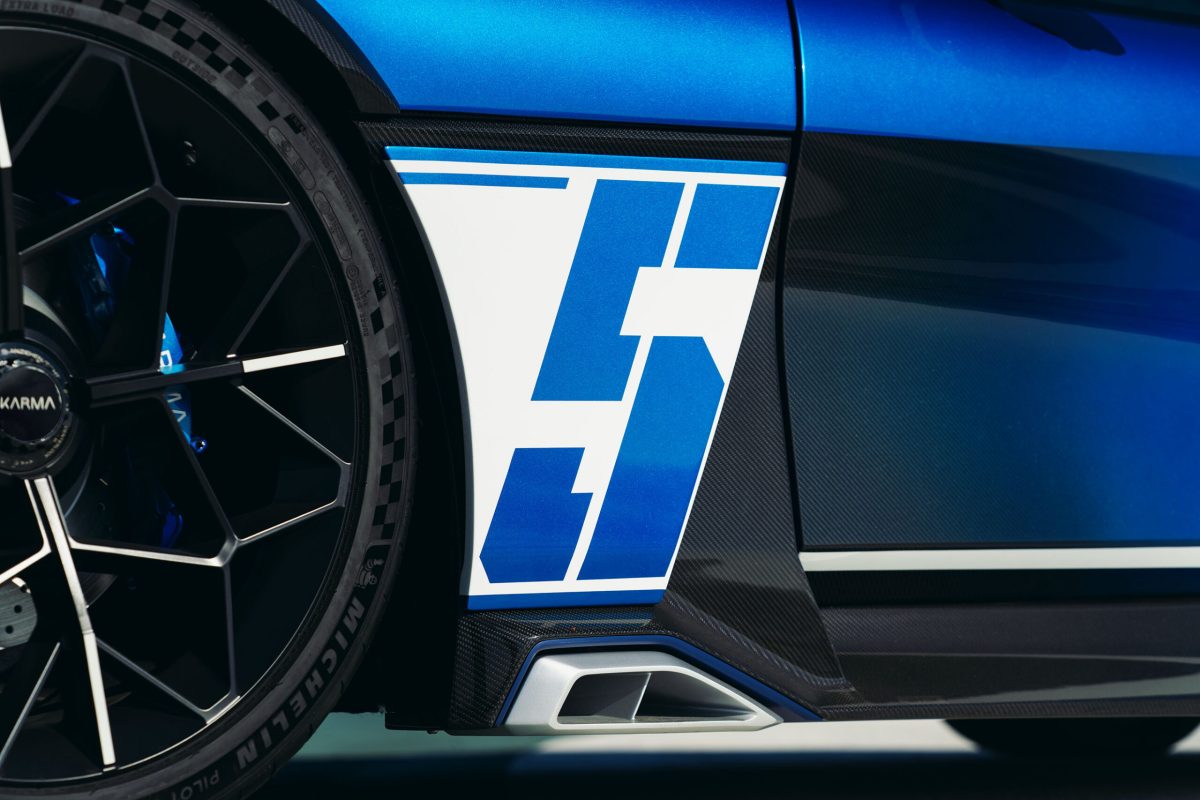
The body is approximately 2 inches wider than the standard Revero because of extended wheel arches. Extensive carbon-fiber construction is complemented by 21-inch magnesium wheels with center-lock fasteners, reducing rotating and unsprung mass compared with heavier conventional wheel designs.
A front splitter, enlarged air intakes, vented front fenders, substantial rear diffuser and full-width GT wing form the aerodynamic package. Karma says the rear wing is intended to improve stability and downforce at high speeds, although the company has not disclosed aerodynamic load figures.
The exterior combines exposed carbon fiber with Borealis Blue paint, including a gradual transition between the two finishes across the hood and front doors. The number 5 incorporated into the front-fender detailing carries a personal significance for the commissioning customer.
Inside, carbon-fiber Recaro front seats feature Alcantara and leather upholstery, while machined-aluminum pedals and a simplified center console emphasize the track-oriented specification. The console includes an emergency kill switch, and a custom-fitted racing helmet is secured in the rear passenger compartment.
Eximius Opens a Different Business for Karma
The Eximius 1 is not being presented as a conventional production trim or a publicly priced performance upgrade. It is a customer-commissioned vehicle intended to demonstrate the scope of Karma’s new bespoke operation.
That distinction matters because the program goes further than Karma’s existing Studio personalization offering. Eximius customers can request engineering changes involving performance and powertrain components, rather than selecting only finishes, materials and visual treatments.
For a manufacturer producing vehicles in the hundreds rather than the thousands, individually commissioned projects offer another way to use its engineering capabilities without requiring a separate mass-production model. Karma has not disclosed the Eximius 1’s transaction price or the cost structure for future commissions.
The program also arrives during a broader product transition. Karma says its Gyesera Grand Coupe plug-in hybrid is scheduled to reach dealerships in December 2026, followed by the Amaris GT plug-in hybrid in the fourth quarter of 2027. The electric Kaveya Super Coupe is scheduled for the first quarter of 2028.
Eximius therefore introduces a separate development path alongside those planned production vehicles: customer-specific projects that can depart substantially from the standard mechanical specification. The Eximius 1’s planned 2027 delivery will provide the first tangible test of that approach.

