
Volkswagen has unveiled the all-electric ID. Tiguan, which will replace both the ID.4 and ID.5 in Europe in early 2027. The new SUV introduces updated electric powertrains, up to 373 miles of WLTP range, a redesigned interior with physical controls, and more practical storage.
Revealed on October 9, 2026, the ID. Tiguan marks a change in Volkswagen’s electric vehicle strategy. Instead of continuing with numerical names alone, the manufacturer is bringing one of its most recognizable SUV nameplates into the ID. family. The new model uses an updated MEB+ platform and will be manufactured in Emden, Germany.
For American buyers, the announcement raises questions about the future of the ID.4, Volkswagen’s established electric SUV in the United States. However, the company has not confirmed whether the ID. Tiguan will reach American dealerships or replace the current U.S.-market model.
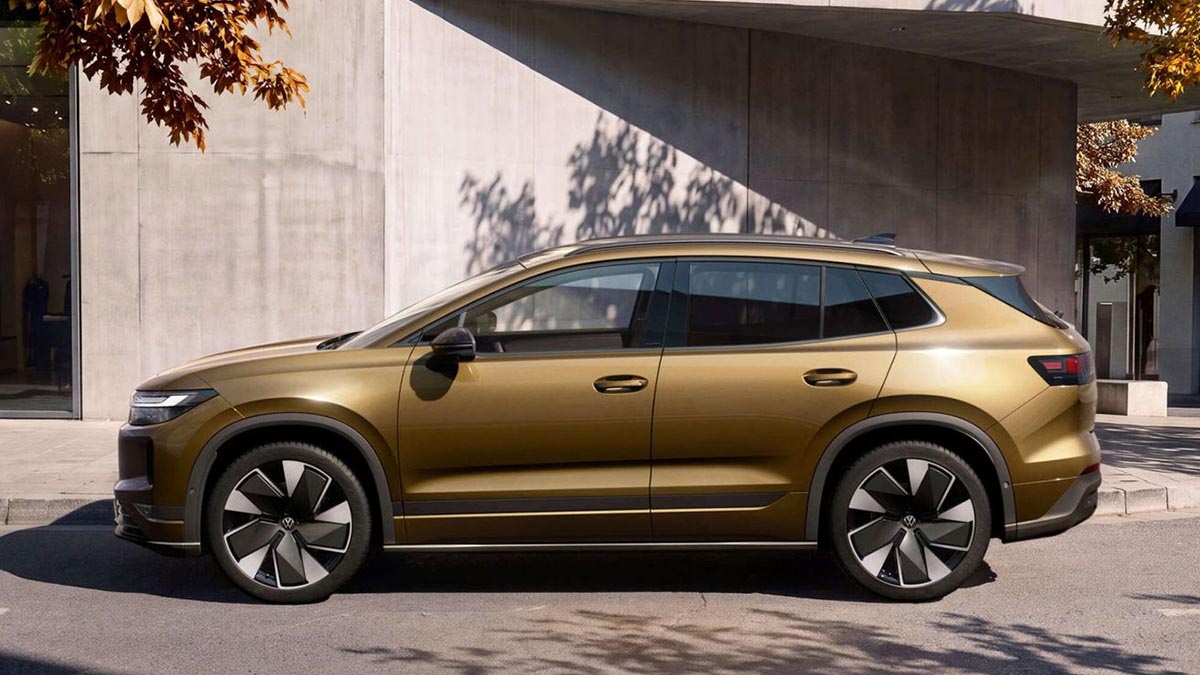
Volkswagen Consolidates the ID.4 and ID.5 Into One Electric SUV
The ID. Tiguan succeeds two electric vehicles that Volkswagen says have collectively exceeded 950,000 units produced. Rather than developing separate successors for the conventional ID.4 SUV and the coupe-styled ID.5, the manufacturer is consolidating them under a single nameplate.
The decision reflects Volkswagen’s broader move toward familiar model names for its electric vehicles, following the same direction as the ID. Polo and ID. Cross.
Importantly, the electric ID. Tiguan does not replace the combustion-powered Tiguan. Volkswagen plans to sell both models alongside each other, allowing the established SUV nameplate to cover different powertrain technologies.
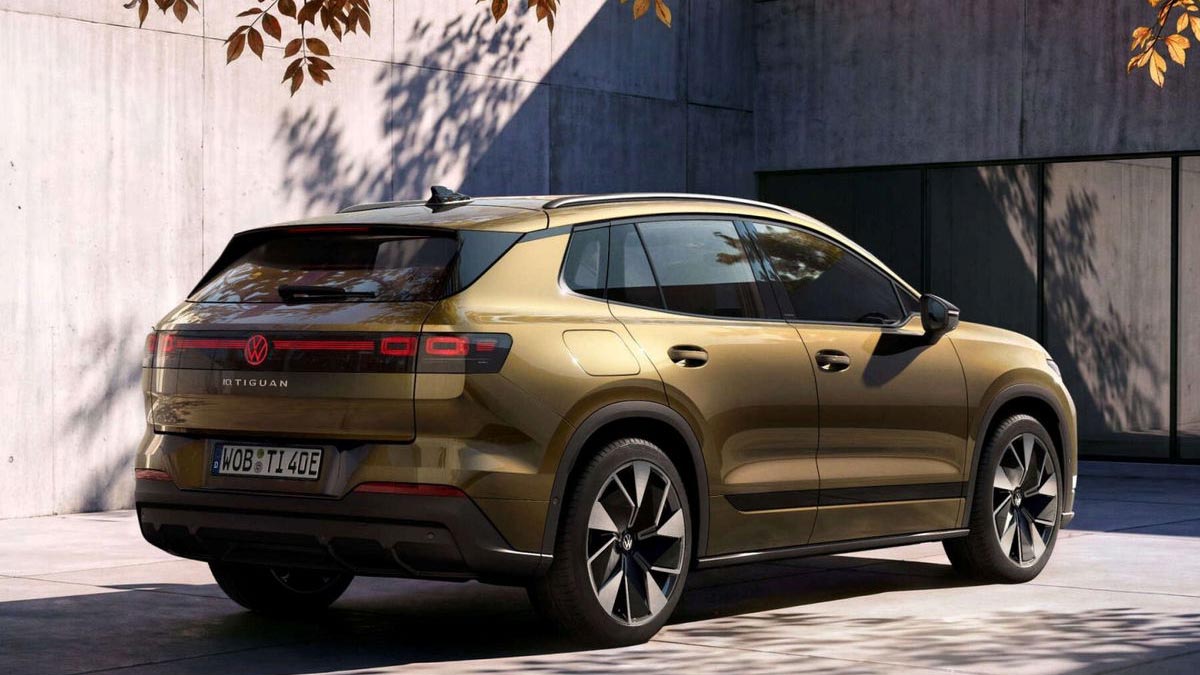
The new electric model also adopts more conventional SUV styling. Its design features stronger body surfaces, a more upright appearance and traditional pull-style exterior door handles.
Production will take place at Volkswagen’s Emden factory, while the conventional Tiguan remains associated with Wolfsburg.
Three Electric Powertrains and Up to 373 Miles of WLTP Range
Built on the updated MEB+ architecture, the ID. Tiguan will offer three powertrain configurations, including two rear-wheel-drive versions and one 4MOTION all-wheel-drive model.
The entry-level version produces approximately 188 hp and uses a 58-kWh battery. A more powerful rear-wheel-drive configuration delivers approximately 282 hp with a 77-kWh battery, while the 4MOTION variant increases output to approximately 295 hp using the same stated battery capacity.
These horsepower figures are converted from Volkswagen’s original European ratings of 190, 286 and 299 metric horsepower (PS).
Volkswagen claims a maximum driving range of 600 kilometers, equivalent to approximately 373 miles, depending on configuration. That figure is measured under Europe’s WLTP testing procedure and should not be confused with an EPA-certified estimate.
The manufacturer has not provided individual maximum range figures for all three versions in its announcement.
Practicality is another focus. The five-seat SUV introduces a front trunk offering approximately 1.1 cubic feet of storage, supplementing a rear cargo compartment rated at approximately 18.9 cubic feet.
Volkswagen also quotes European towing capacities of up to approximately 3,968 pounds for the smaller-battery version and 4,409 pounds for configurations equipped with the 77-kWh battery. Those figures are not U.S.-certified towing ratings.
Redesigned Interior Restores Physical Controls
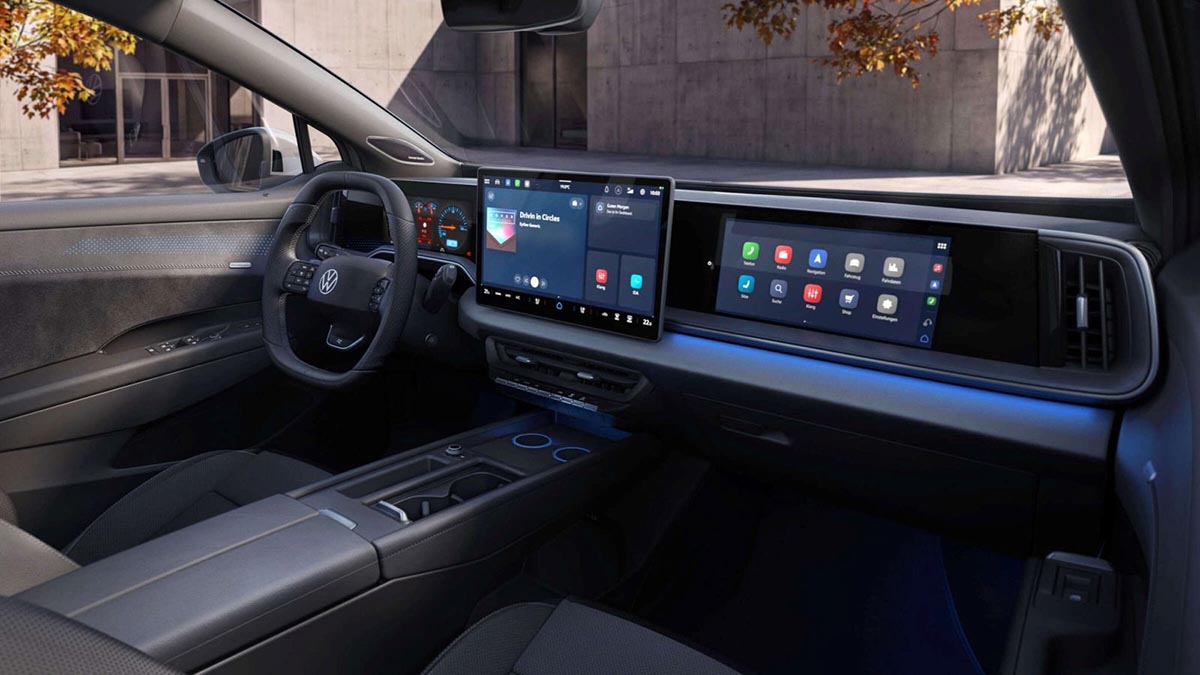
The ID. Tiguan introduces a substantially revised dashboard, combining a 10-inch digital instrument cluster with a 15-inch central touchscreen. An optional 12-inch passenger display adds a separate entertainment and information interface.
However, the most meaningful usability changes involve controls rather than screen size.
Volkswagen has replaced touch-sensitive steering-wheel controls with conventional physical buttons. The redesigned center console also includes dedicated climate-control buttons and a separate controller for frequently used audio functions.
These changes reduce reliance on touchscreen interactions for everyday adjustments, addressing a common usability concern with highly digital vehicle interiors.
The new SUV also introduces standard one-pedal driving, allowing drivers to decelerate by releasing the accelerator pedal.
An updated Connected Travel Assist system adds support for assisted highway lane changes and stopping at red traffic lights under applicable operating conditions. These remain driver-assistance functions rather than autonomous driving capabilities.
Vehicle-to-load functionality is available through Volkswagen’s PowerSocket adapter, allowing the traction battery to supply electricity to compatible external equipment.
European Sales Begin in 2027, but U.S. Plans Remain Unconfirmed
According to Volkswagen’s official announcement, the ID. Tiguan will be offered in Europe in four equipment lines: Trend, Life, Style and R-Line.
German pricing starts at €42,695, with advance sales scheduled to begin October 13, 2026. The market launch is planned for early 2027.
That German price is not an indication of potential U.S. pricing, since taxes, equipment and market requirements differ.
For Volkswagen’s American electric SUV lineup, the key unresolved issue is whether the ID. Tiguan will eventually replace the ID.4 or whether the company will maintain a separate strategy for North America.
Until Volkswagen confirms its plans, the ID. Tiguan’s announced specifications and launch schedule apply to Europe, with no U.S. MSRP, EPA range rating or American release date established.

