
Citroën has revived the spirit of its classic 2CV delivery van with the electric 2CV Fourgonnette Concept, unveiled at the 2026 Paris Motor Show. Unlike the accompanying 2CV passenger car, however, the retro-inspired commercial vehicle has no confirmed production program.
Presented on October 12, 2026, the Fourgonnette reinterprets one of Citroën’s most recognizable commercial vehicles for the electric era. Its purpose is straightforward: explore how a small, practical, affordable delivery vehicle could combine modern mobility with the personality of the original 2CV van. Citroën describes the project as a design study rather than an imminent production model, and neither a European launch nor a US introduction has been announced.
That distinction matters because the accompanying 2CV Concept has a substantially clearer future. Citroën says a production passenger model inspired by that concept will join its European lineup by 2028, targeting a starting price around €15,000. The Fourgonnette, by contrast, remains an exploration of what a modern 2CV-based work vehicle could become.
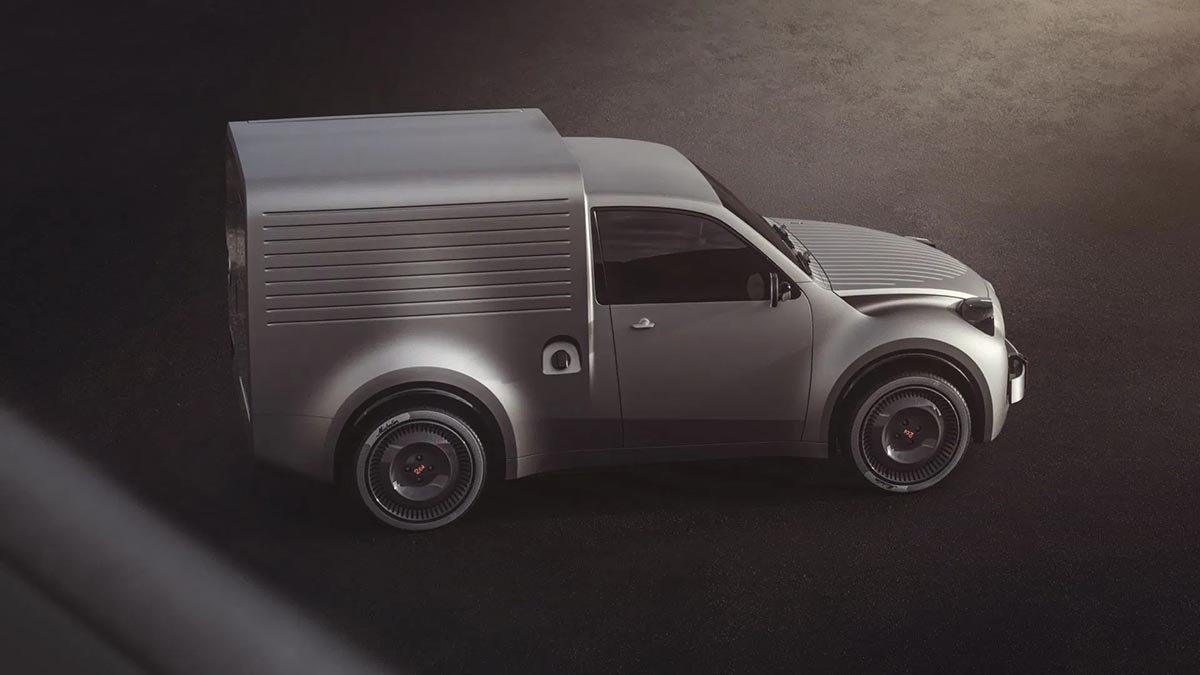
A Modern Electric Tribute to the Original 2CV Delivery Van
The original Citroën 2CV debuted at the 1948 Paris Motor Show, introducing a philosophy built around inexpensive, straightforward transportation. Its commercial derivative, the 2CV Fourgonnette, arrived in 1951 and became a familiar sight among European shopkeepers, tradespeople, and delivery drivers.
The original commercial version was valued for its usefulness rather than its performance or sophistication. It brought the 2CV’s basic mechanical philosophy to a small cargo vehicle, providing an affordable transportation solution for businesses that did not need a larger van.
The 2026 concept revisits that formula without attempting to reproduce the original mechanically. Citroën’s designers envision an electric vehicle focused on essential transportation requirements, everyday usability, and recognizable styling.
In its official announcement, Citroën identifies the Fourgonnette as the commercial counterpart to the new 2CV Concept. The company emphasizes simplicity, ingenious design, and ease of use rather than promising specific payload or performance figures.
Xavier Chardon, CEO of Citroën and DS Automobiles, explained the reasoning behind the project: “Because being useful should never mean being ordinary.”
That statement captures the concept’s design objective. Rather than treating a delivery van as a purely functional box, Citroën is exploring whether distinctive styling and straightforward engineering can coexist in a vehicle intended for everyday work.
The company has not published a complete technical specification for the Fourgonnette. Its announcement establishes the electric concept’s intended purpose but does not disclose its battery capacity, motor output, driving range, charging performance, payload rating, or cargo volume.
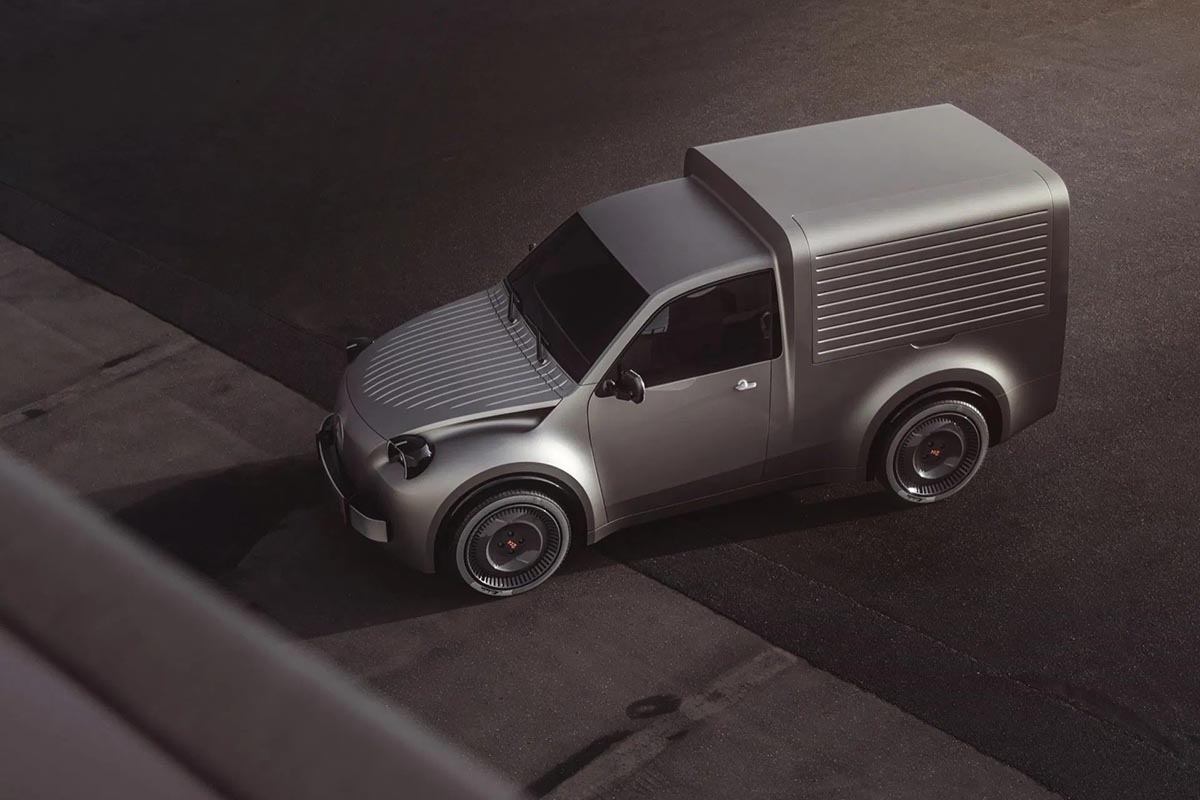
The Fourgonnette Is Not Yet Part of Citroën’s Production Plans
The most significant detail in Citroën’s announcement concerns the project’s status. Although the Fourgonnette appears alongside a passenger concept that previews a future production vehicle, the manufacturer explicitly says the van does not preview a production model in the short term.
Citroën characterizes the Fourgonnette as a passion project developed by its designers. The goal was to revisit an important part of the brand’s commercial-vehicle history and explore how its underlying principles could apply to electric transportation.
That means there is currently no confirmed production date, factory allocation, retail price, or order schedule for the new Fourgonnette.
Reports connecting a potential production van with Stellantis manufacturing operations in Italy should therefore be treated as speculation unless supported by a specific manufacturing announcement. Citroën’s October 12 release does not establish such a production commitment.
The distinction also prevents the passenger car’s announced targets from being incorrectly applied to the commercial concept. The approximately €15,000 starting-price ambition belongs to the future 2CV-inspired passenger model, not to a confirmed Fourgonnette.
For prospective commercial customers, the unanswered questions are substantial. A production electric van would need a defined payload capacity, usable cargo compartment, charging specification, and operating range before businesses could evaluate its suitability for deliveries or service work.
None of those figures has been confirmed for this concept. The Fourgonnette therefore remains an illustration of Citroën’s thinking rather than a vehicle businesses can currently plan to purchase.
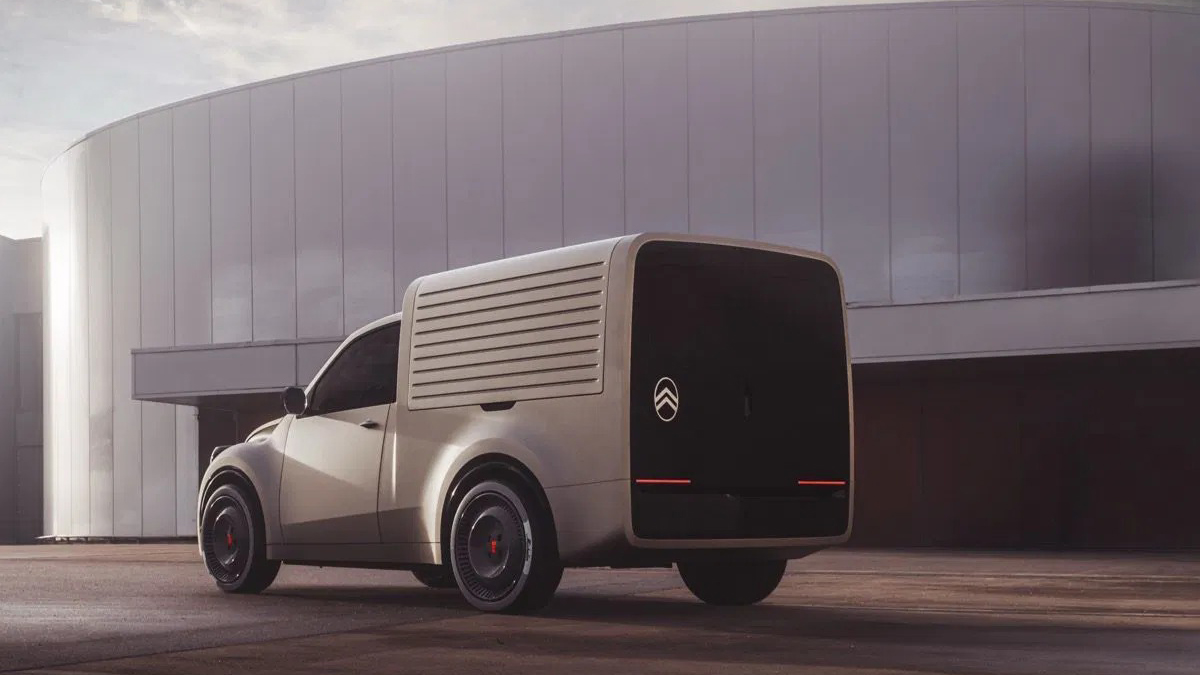
The Passenger 2CV Concept Provides a More Concrete Preview
Although Citroën has not announced production specifications for the Fourgonnette, the accompanying passenger 2CV Concept offers useful context for the company’s small-electric-vehicle strategy.
Unveiled at the same Paris show, the passenger concept measures approximately 148 inches long, making it a particularly compact vehicle by American standards. Citroën says its design emphasizes maneuverability, efficient packaging, and uncomplicated everyday transportation.
The manufacturer is targeting a vehicle weight of approximately one metric ton, equivalent to roughly 2,205 pounds. That is a development objective for the passenger concept, not a verified curb weight for the Fourgonnette.
Citroën argues that controlling vehicle weight can reduce the need for a large, expensive battery. The idea is to match electric-vehicle capabilities to typical everyday journeys rather than maximizing battery capacity and driving range regardless of cost.
The passenger model is intended to occupy a position between the Citroën Ami and C3 in the company’s European range. Citroën says the future production car will be manufactured in Europe, with a target starting price near €15,000 and an introduction planned by 2028.
That price is a European manufacturer target, not an American MSRP. Citroën has not announced US pricing, EPA-certified range, or a US launch for the vehicle.
Several design choices in the passenger concept reinforce the company’s emphasis on simplicity. Citroën describes independently replaceable bumpers, a minimalist dashboard arrangement, and practical interior storage solutions. The concept also features a canvas roof, a single-spoke steering wheel, and styling references to the original 2CV.
These details demonstrate the philosophy behind the broader 2CV revival, but they should not be interpreted as confirmed equipment for the Fourgonnette. The commercial concept has its own development status, and Citroën has not established which features would survive into a hypothetical production van.
Citroën Already Offers a Different 2CV-Inspired Van
The new concept is not Citroën’s first modern interpretation of the historic Fourgonnette. In September 2022, the manufacturer announced a collaboration with Italian coachbuilder Caselani to create a retro-styled conversion of the existing Citroën Berlingo.
That earlier project is particularly relevant because, unlike the 2026 design study, it became a commercial product.
The Caselani Fourgonnette uses the contemporary Berlingo as its foundation, replacing or covering exterior body elements with specially designed fiberglass panels inspired by the historic 2CV delivery van.
Its styling references include the distinctive front end, prominent round headlights, and corrugated-looking bodywork associated with the original commercial vehicle. The conversion was developed with Citroën’s involvement and is offered under an official license.
Importantly, the Caselani conversion retains the Berlingo’s underlying vehicle architecture and mechanical systems. It is a retro body conversion rather than an entirely new electric-vehicle platform.
Caselani’s current product information identifies panel van, crew cab van, and passenger van configurations. The coachbuilder also states that the conversion underwent pedestrian-impact testing at Stellantis facilities in Turin in 2024.
The distinction between the two projects is fundamental. The Caselani Fourgonnette is an existing Berlingo-based vehicle with historical styling. The 2026 2CV Fourgonnette Concept is a separate design exercise imagining a future electric commercial vehicle inspired by the original.
For buyers who want a retro-styled Citroën commercial vehicle today, the Caselani conversion is the tangible option in markets where it is offered. For those interested in an entirely new electric interpretation of the 2CV van, Citroën has presented a design but not a production commitment.
What the Concept Means for American Buyers
There is no announced US-market program for the 2026 Citroën 2CV Fourgonnette Concept. Citroën has not provided American specifications, pricing, certification details, or a dealership launch plan.
Even in Europe, the vehicle’s commercial future remains undecided. That makes comparisons with American electric commercial vehicles premature: without verified cargo dimensions, payload ratings, battery capacity, or driving range, there is no meaningful basis for evaluating its working capabilities against production vans.
Nevertheless, the Fourgonnette highlights a different approach to electric commercial-vehicle design. Instead of focusing on a large delivery vehicle, Citroën is revisiting the idea of a small, accessible work van built around everyday transportation needs.
The broader 2CV revival has a defined next step through the planned passenger model, but the Fourgonnette does not share its confirmed timetable. For now, Citroën has revived a familiar commercial-vehicle silhouette and outlined an electric design philosophy without committing to manufacture the van.

