
The electric Citroën 2 CV Concept replaces the traditional dashboard with a minimalist layout designed to maximize space and rethink everyday practicality. With a production model planned for 2028 and a European starting-price target of around €15,000, the question is how much of this unusual cabin can survive the transition from concept to affordable city car.
Unveiled on October 11 ahead of the 2026 Paris Motor Show, the Citroën 2 CV Concept brings back one of France’s most recognizable automotive names. Its rounded bodywork and retractable fabric roof pay tribute to the original 2CV, but the interior takes a more ambitious approach: instead of redesigning the dashboard, Citroën has largely eliminated it.
The concept previews a small electric car that Citroën intends to manufacture in Europe, with a production model to be unveiled within two years. No US launch has been announced, and the proposed €15,000 price is a European target, not an American MSRP. More importantly, Citroën has not confirmed which interior features will make it into the showroom version.
A Dashboard Reduced to Its Essentials
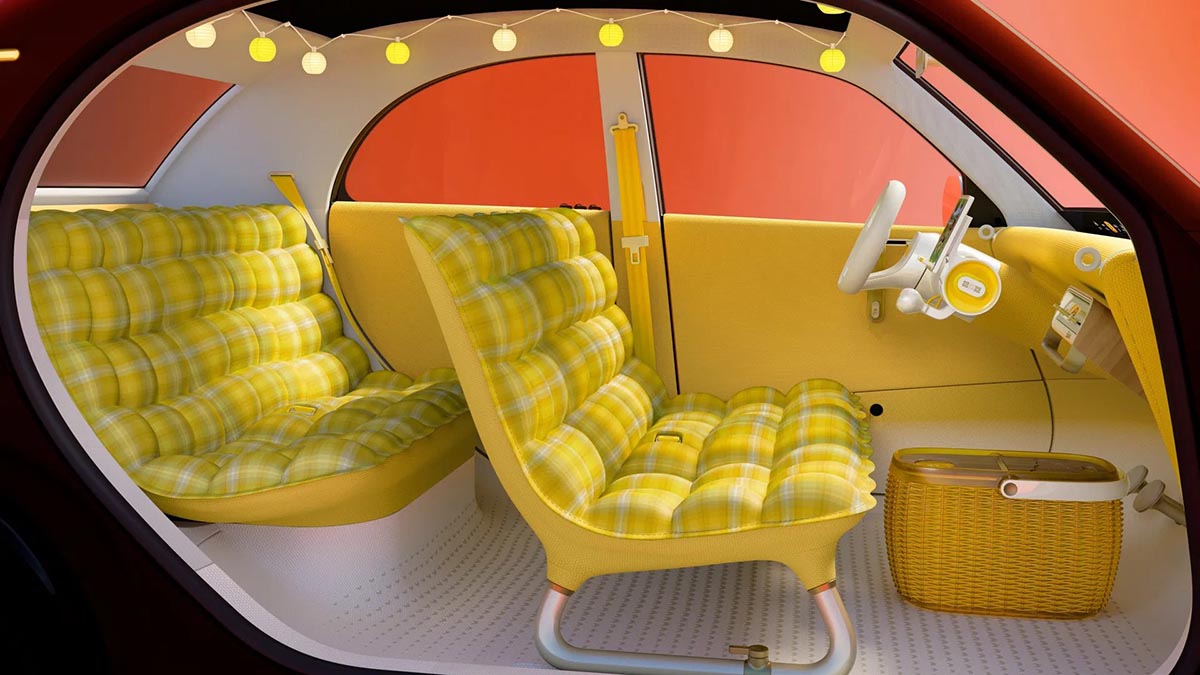
The most striking feature of the new 2 CV is the absence of a conventional dashboard stretching across the passenger compartment.
Instead, Citroën has installed a cylindrical structure that supports a single-spoke steering wheel, a combined control stalk, a gear selector, and a small storage compartment. A slim Citroën Smart Vision display presents essential driving information in the driver’s field of view.
An 8-inch square touchscreen handles infotainment functions, using colorful, comic-book-inspired graphics rather than the increasingly large displays found in many modern vehicles.
2026 GMC Sierra 1500: Verified Prices, Engine Options and Features Ahead of the 2027 Redesign
The arrangement creates an unusually open cabin for a car measuring just 12.3 feet (3.76 meters) long. Recessed door panels contribute additional usable space, while wide bench-style seats reinforce the connection to the original 2CV.
According to Citroën’s official presentation, the front bench can even be removed for use outside the vehicle. A detachable storage basket takes the place of a conventional center console, and flexible straps serve as door handles.
These features reflect the original 2CV’s philosophy of prioritizing simple, useful solutions over conventional automotive design. But they also raise a practical question: which ideas are suitable for a mass-produced vehicle?

Could a Simpler Interior Help Keep the Price Down?
Citroën’s minimalist approach is particularly relevant because of the price it wants to achieve. At approximately €15,000 in Europe, the future electric 2CV would target buyers who prioritize affordability over extensive equipment lists.
A simpler dashboard could potentially reduce the number of interior components, assembly operations, and decorative trim pieces. Replacing a large center console with basic storage could offer similar opportunities.
However, Citroën has not published any manufacturing-cost comparison between the concept’s architecture and a conventional dashboard. The unusual design may simplify certain components while introducing additional engineering challenges elsewhere.
The removable front bench is a particularly demanding example. Any production version would need secure seat mounting and occupant-restraint systems that meet applicable safety requirements. Its ability to detach cannot come at the expense of crash protection.
Volkswagen ID. Tiguan Replaces Two EVs in Europe, but Its U.S. Future Is Unclear
The dashboard-free layout also does not eliminate the need for heating, ventilation, defrosting, airbags, and other essential systems. These components must still be integrated somewhere in the vehicle, even if they are hidden from view.
That distinction matters. A visually minimalist cabin is not necessarily cheaper to manufacture, and Citroën has yet to demonstrate that its unconventional arrangement delivers measurable savings.
The Production 2CV Faces a Bigger Challenge Than Its Dashboard
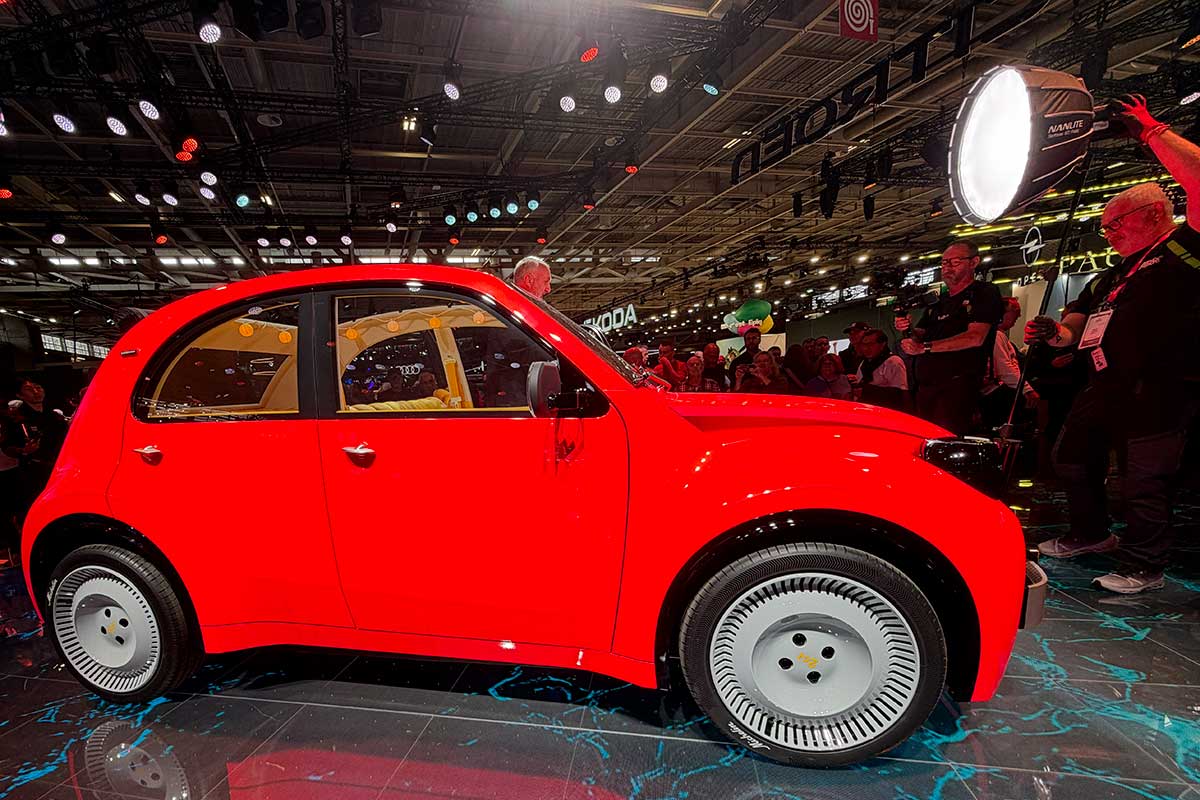
The production model is expected to arrive in 2028, with European manufacturing and a target starting price of around €15,000. Citroën says it is being developed with the European Union’s proposed E-Car regulatory framework in mind, an initiative intended to support more affordable small vehicles.
That regulatory approach could influence the vehicle’s engineering and equipment requirements. However, the final rules and their implications for the production 2CV remain important variables.
The concept also emphasizes lightweight construction. Citroën is targeting a weight of approximately 2,205 pounds (1,000 kilograms), a figure that could help limit the battery capacity required for everyday urban driving.
But the company has not disclosed a production battery capacity, motor output, charging specifications, or certified driving range. It would therefore be premature to judge how competitive the future 2CV will be against other inexpensive European electric cars.
For American readers, the concept illustrates a different approach to EV development: rather than adding larger displays and increasingly elaborate interiors, Citroën is exploring whether a small electric car can deliver the essentials with less complexity.
The US market is not part of the announced launch plan, and the concept’s European regulatory strategy should not be confused with compliance with American vehicle standards.
For now, the dashboard-free interior remains a concept-car proposal, not a confirmed production feature. The real test will come when Citroën reveals the final 2CV and shows whether its simplified architecture can coexist with modern safety requirements, everyday usability, and the promised affordable price.

